Torilis japonica - Upright hedge-parsley
Family: Apiacea (Umbelliferae) Carrot [E-flora]
Google Gemini - Summaries & Tables created with AI prompting and may require extra scrutiny
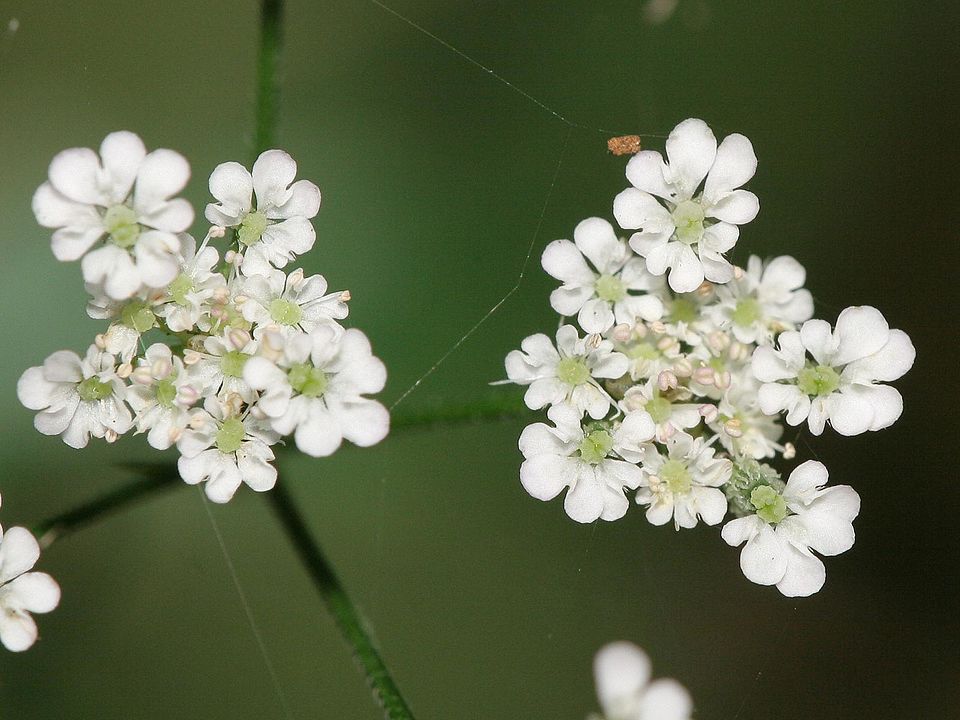
(Wikimedia)1
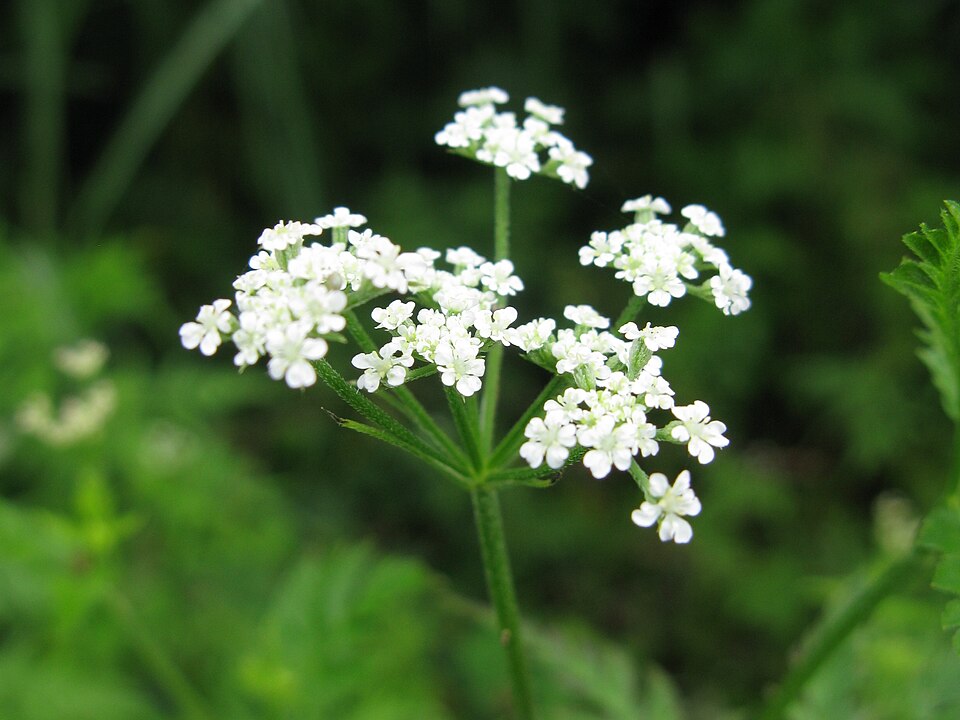
(Wikimedia)2
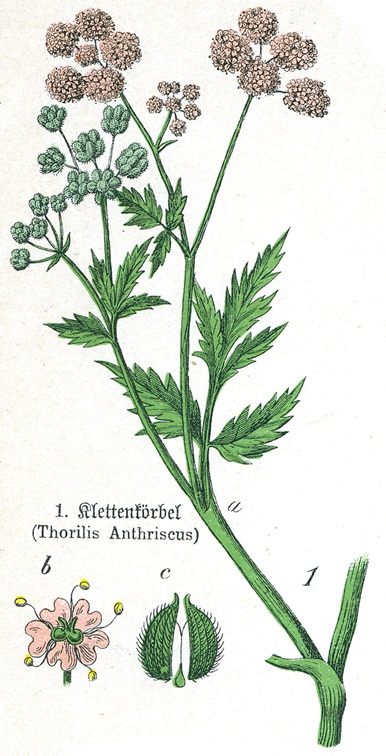
(Wikimedia)3
Image References
- 1, Torilis japonica, Kristian Peters -- Fabelfroh 07:58, 14 September 2007 (UTC), CC BY-SA 3.0
- 2, Torilis japonica, Qwert1234, CC BY-SA 3.0
- 3, Torilis japonica, Gotthilf Heinrich von SchubertFile:Naturgeschichte des Pflanzenreichs Tafel XVI.jpg: Аимаина хикари, Public domain, via Wikimedia Commons
"Torilis japonica is a ANNUAL growing to 1 m (3ft 3in). It is in flower from Jul to August, and the seeds ripen from Aug to September. The flowers are hermaphrodite (have both male and female organs) and are pollinated by Insects, self. The plant is self-fertile.
Suitable for: light (sandy), medium (loamy) and heavy (clay) soils and prefers well-drained soil. Suitable pH: acid, neutral and basic (alkaline) soils. It can grow in semi-shade (light woodland) or no shade. It prefers dry or moist soil." [PFAF]
"General: Annual herb from a taproot; stems erect, several, bristly, 0.3-1.2 m tall." [IFBC-E-flora]
"Leaves: Stem leaves 1-3 times pinnately cut, dissected into small, narrow ultimate segments without well-defined leaflets, upper leaf sheaths entire." [IFBC-E-flora]
"Habitat / Range Mesic disturbed sites or open forests in the lowland and montane zones; rare, known only from the Gulf Islands and Agassiz; introduced from Japan." [IFBC-E-flora]
Status: Exotic [E-flora]
Edible Uses
- Leaves
- "Leaves - cooked[105, 177]." [PFAF]
- Root
- "Root - peeled and eaten raw[105, 177]. Although we have no record of the seed being edible, there is a report that it contains 16 - 21% protein and 10 - 23% fat[218]." [PFAF]
Medicinal Uses
- Digestive Aid
- "The juice of the root is used in the treatment of indigestion[272]." [PFAF]
- Seed
- "The seed is anthelmintic, antifungal, antiviral, expectorant and tonic[218, 279]. It is used in Korea in the treatment of amnesia, pruritis, acidosis and scabies[279]." [PFAF]
Phytochemicals
1. Non-Volatile Secondary Metabolites
| Substance (Chemical) | Compound Type | Quantity | Plant Part |
|---|---|---|---|
| Torilin (syn. 8,11-dihydroxy-4-guaien-8-angeloyl-11-acetyl-3-one) | Guaiane-type sesquiterpene | Major bioactive constituent | Dried Fruit |
| 11-acetoxy-8-isobutyryl-4-guaien-3-one | Guaiane-type sesquiterpene | Not determined (nd) | Dried Fruit |
| Torilolone | Guaiane-type sesquiterpenoid | nd | Dried Fruit |
| Voleneol | Eudesmane-type sesquiterpenoid | nd | Dried Fruit |
| Cardinatoriloside | Cadinane-type sesquiterpene | nd | Fruit |
| Torilolide | Germacrene-type sesquiterpene | nd | Fruit |
| (Z,Z)-9,12-octadecadienoic acid | Fatty acid | nd | Dried Fruit |
| 5α,17β-dihydroxy-de-A-estra-5,7,9,14-tetraene | Steroid | nd | Dried Fruit |
2. Flavonoid Derivatives
These compounds serve as chemotaxonomic markers of the Torilis genus.
| Substance (Chemical) | Compound Type | Quantity | Plant Part |
|---|---|---|---|
| Quercetin | Flavonol | 0.003% | Aerial parts |
| Luteolin | Flavone | 0.004% | Aerial parts |
| Kaempferol | Flavonol | 0.003% | Aerial parts |
| Apigenin | Flavone | nd | Dried Aerial parts |
| Apiin (Apigenin 7-O-apiosylglucoside) | Flavone glycoside | nd | Dried Aerial parts |
3. Major Volatile Compounds (Essential Oil)
| Substance (Chemical) | Compound Type | Quantity (% of Essential Oil) | Region/Part |
|---|---|---|---|
| β-Eudesmene | Sesquiterpene | 22.87% | China / Dried Aerial parts |
| Germacrene D | Sesquiterpene | 57.9% - 71.8% | Japan / Fresh Aerial parts/Fruit |
| 1,6-Germacradien-5-ol | Sesquiterpene | 38.46% | Poland / Dried Fruit |
| β-Caryophyllene | Sesquiterpene | 11.33% | India / Fresh Aerial parts |
Phytochemical Table Source: Rahimpour, Yahya, et al. "A Review on Torilis japonica: Ethnomedicinal, Phytochemical, and Biological Features." (2023).
Pharmacology
Anticancer Research Summary: Torilis japonica
Torilis japonica (TJ) represents a significant natural source for potential oncology therapeutics, rooted in its traditional use for treating "uterine tumors" in folk medicine[cite: 1]. The primary bioactive driver is torilin, a guaiane-type sesquiterpene that demonstrates a sophisticated "triple-threat" approach to cancer: inhibiting the formation of tumor-feeding blood vessels (angiogenesis), preventing the spread of cells to distant organs (metastasis), and restoring the efficacy of chemotherapy in drug-resistant cells (MDR reversal). Modern pharmacological evaluations confirm that TJ extracts induce programmed cell death (apoptosis) and arrest the growth cycle of various malignant lines, including those of the lung, breast, and brain, effectively validating centuries of ethnomedicinal practice through contemporary molecular biology.
Detailed Research Insights
1. Molecular Mechanisms of Action
- Anti-Angiogenesis: Torilin inhibits the signals tumors use to grow new blood vessels. The document states it "reduced basic fibroblast growth factor-induced vessel formation" and downregulated hypoxia-inducible vascular endothelial growth factor (VEGF).
- Invasion & Metastasis Suppression: Research found that torilin "blocks invasion of HT1080 cells in-vivo and in-vitro" by reducing the activity of matrix metalloproteinase-9 (MMP-9), an enzyme cancer uses to break through tissue barriers.
- EGFR Pathway Targeting: "One of the critical factors in abnormal metastasis of lung cancer cells is the over-activity of the epidermal growth factor receptor (EGFR). Kim et al. (2017) experimented the inhibitory effect of the T. japonica extract of EGFR in A549 lung cancer cells, and the mechanism of expression suppression of abnormal metastasis-related factors via translocation to the cancer cell nucleus. The result presented that treatment of the T. japonica extract could inhibit the EGFR signalling pathway, co-binding with Stat3 and dimer formation, and suppress the expression of cancer cell abnormal metastasis and metastasis related factor in comparison with the EGF-stimulated group."
2. Overcoming Multidrug Resistance (MDR)
One of the most critical findings for clinical researchers is the plant's ability to act as a chemosensitizer. The document explicitly notes:
"Torilin potentiated the cytotoxicity of vinblastine, colchicine, adriamycin, and taxol against multidrug resistant MCF7/ADR and KB-V1 cells".
This suggests that TJ constituents could be used in tandem with existing chemotherapy to "break through" the biological shields that make some cancers untreatable.
3. Tested Cancer Cell Lines & Potency
| Cancer Type | Cell Line | Observed Effect |
|---|---|---|
| Lung Cancer | A549 / LLC | Suppression of abnormal metastasis and IC50 values of values of 31.3, 32.5, and 34.0 μg/mL, respectively |
| Breast Cancer | MCF-7 | Reversal of adriamycin resistance. |
| Brain Cancer | U87MG | Induced apoptotic cell death and S-phase cell cycle arrest. |
Conclusion of Scientific Methodology
The conclusions in "A Review on Torilis japonica: Ethnomedicinal, Phytochemical, and Biological Features." were reached through a multi-stage bioassay-guided approach. Researchers moved from ethnobotanical documentation to phytochemical isolation (using HPLC and Column Chromatography) to identify torilin. They then validated these findings through in-vitro cell assays (measuring IC50 with MTT) and in-vivo physiological models, such as the mouse Matrigel plug and chick embryo chorioallantoic membrane (CAM) assays, to visually confirm anti-tumor activity in living tissues.
A Comprehensive Summary of Non-Oncological Pharmacological Activities
This species is a "phytochemically and biologically important" plant with applications far exceeding tumor treatment. From acting as a potent anti-inflammatory agent to showing promise in anti-obesity and heart health, the plant’s chemical profile - rich in torilin and flavonoids - targets multiple physiological systems. Its ability to block viral replication, neutralize free radicals, and manage skin aging highlights its potential as a "potential phytopharmaceutical candidate" for diverse chronic and acute conditions.
Skin Care & Photoaging
Hyperpigmentation: Torilin is a powerful inhibitor of melanin, showing an IC50 value 25 μM compared to arbutin's IC50 value of 170 μM.
Anti-Aging: The extract efficiently decreased UVB-induced MMP-3 and MMP-1 protein and mRNA levels to prevent wrinkles.
Dermatitis: "The T. japonica aqueous extract was subjected to examination on DNCB-induced contact dermatitis (CD) animal models. The results suggested that topical application of the plant has a therapeutic effect on AD {Allergic dermatitis}...."
Anti-Infective Potential
Anti-Viral: "Acute hepatitis initiated by hepatitis A virus (HAV).... Ten herbal extracts showed significant anti-HAV activity without exhibiting cytotoxicity and the T. japonica extracts reduced HAV titer by 1.90 +/- 0.33 logs."
Antimicrobial: "In food sterilizing, inactivating endospores bacteria like Bacillus subtilis is crucial to maximize quality and safety.... They found that ethanolic extracts of 13 herbs including T. japonica at concentration 1% (w/v) have high sporicidal activity and reduced spore count by 99%."
Anti-Protozoal: "Youn et al. (2003) analyzed the in vitro anti-protozoal activity of the ethanolic extract of T. Japonica against T. gondii, and N. caninum tachyzoites in concentrations ranging from 625 to 19.5 ng/mL. [60] The ethanolic extract suppressed N. caninum proliferation by 97.8, 97.9, 85.3, and 46.4%, and T. gondii proliferation by 99.3, 95.5, 73.0, and 54.0% in the range 156 to 19.5 ng/mL."
Metabolism & Heart
Anti-Obesity: The extract "significantly inhibited adipocyte differentiation and intracellular triglyceride (TG) levels"
Heart Health: Torilin may act as an "open-channel blocker of the hKv1.5 channel," suggesting its use as an anti-arrhythmic drug
Prostate Health (BPH): "torilin inhibited testosterone 5α-reductase enzyme" an enzyme involved in prostate enlargement
Anti-Inflammatory & Antioxidant
The "Master" Compound: "Torilin significantly inhibited LPS-induced NO release, iNOS, NF-α, IL-1β, IL-6, COX-2, PGE2, and GM-CSF gene and protein expressions."
Radical Scavenging: Aqueous extracts can "scavenge DPPH radical in a dose-dependent manner up to 63.8%"
Pain Relief: "Torilin showed strong anti-carrageenan activity at P.O. of 90 and 270mg/kg and increased the pain threshold in rats."
Synonyms
References
- [E-flora] Torilis japonica, https://linnet.geog.ubc.ca/Atlas/Atlas.aspx?sciname=Torilis%20japonica&redblue=Both&lifeform=7, Accessed March 23, 2021
- [PFAF] Torilis japonica, Plants for a future, Accessed November 17, 2014; March 23, 2021
- [17]Clapham, Tootin and Warburg. Flora of the British Isles.
- [105]Tanaka. T. Tanaka's Cyclopaedia of Edible Plants of the World.
- [177]Kunkel. G. Plants for Human Consumption.
- [218]Duke. J. A. and Ayensu. E. S. Medicinal Plants of China
- [272]Manandhar. N. P. Plants and People of Nepal
- [279] Medicinal Plants in the Republic of Korea
TORILIS - Hedge-parsley
"Annual, taprooted, hairy or bristly. Stem: spreading or erect, branched. Leaf: blade lanceolate to triangular, 1-pinnately dissected. Inflorescence: umbels compound, terminal or opposite leaves, peduncled or sessile; bracts generally 0 or small; bractlets several, thread-like to linear; rays 0–few, spreading-ascending; pedicels 0 or short. Flower: generally +/- bilateral; calyx lobes 0 or evident; petals obcordate, white or +/- red, tips narrowed, outer petals +/- > others; styles short. Fruit: oblong to ovate, +/- compressed side-to-side; 1o ribs thread-like, prickly, 2o ribs densely prickly or tubercled; oil tubes 1 per rib interval; fruit axis divided in distal 1/2. Seed: face grooved.
10–15 species: Eurasia. (Name used by Adanson in 1763, meaning obscure)" [Jepson]
Local Species
- Torilis arvensis - Spreading hedge-parsley [E-flora]
- Torilis japonica - upright hedge-parsley [E-flora]
Taxanomic Key
- 1. Fruits 3-4 mm long with more or less straight spines minutely hooked at the tips T. arvensis
- 1. Fruits 2-2.5 mm long with curved spines not hooked at the tips T. japonica [E-flora]
References
- [Jepson] 2013. Torilis, in Jepson Flora Project (eds.) Jepson eFlora, http://ucjeps.berkeley.edu/cgi-bin/get_IJM.pl?tid=10232, accessed on Jan 28 2015
Torilis arvensis - Spreading hedge-parsley
"General: Annual herb from a taproot; stems erect, several, more or less hairy, branched, 20-50 cm tall." [IFBC-E-flora]
"Leaves: Stem leaves 2-3 times pinnately cut, 7-20 cm long, including the 2-8 cm stalks; leaflets lanceolate to egg-shaped; upper stem leaves usually 1-pinnate." [IFBC-E-flora]
"Habitat / Range Mesic to dry roadsides and waste places in the lowland zone; rare in SW BC, known only from the lower Fraser Valley; introduced from Eurasia." [IFBC-E-flora]
Status: Exotic [E-flora]
References
- [E-flora] Torilis arvensis, https://linnet.geog.ubc.ca/Atlas/Atlas.aspx?sciname=Torilis%20arvensis&redblue=Both&lifeform=7, Accessed March 23, 2021