Family: Betulaceae (Birch Family) [E-flora]
"Stem: trunk < 35 m; bark smooth, gray to brown; twigs glabrous to fine-hairy, red-gray; lenticels small; winter buds stalked, 0–6-scaled. Leaf: glabrous to fine-hairy; blade 3–15 cm, cordate to elliptic or diamond-shaped. Staminate inflorescence: 5–20 cm; bracts each subtending 3 flowers, 4 bractlets. Pistillate inflorescence: 5–20 mm; bracts each subtending 2 flowers, 4 fused bractlets. Staminate flower: sepals 4; stamens 1–4. Pistillate flower: sepals 0. Fruit: many, in cone-like catkin, not enclosed by bract, winged, bracts 3 mm, woody, persistent." [Jepson]
"+/- 25 species: northern hemisphere, South America. (Latin: alder) Root nodules contain nitrogen-fixing bacteria; wood used for interior finishing, to smoke fish, meats." [Jepson]
Local Species
Identification and Taxonomic Notes
1. Leaves finely once or twice saw-toothed; axillary buds unstalked, pointed; male catkins unstalked; stalks as long as or longer than the conelike sillicles..........................Alnus viridis
1. Leaves coarsely to irregularly round-toothed; axillary buds pedunculate, blunt or short-pointed; male catkins stalked; stalks shorter than the conelike silicles
2. Leaf margins rolled under; nutlets with narrow-winged margins.......................................Alnus rubra
2. Leaf margins not rolled under; nutlets wingless..................................Alnus incana [E-flora]
"Alnus sp. ... (1 loc.) – "alder bark", ground, added to famine bread in earlier times;" (Luczaj, 2008)
"Alnus app. Alder. A pale red dye is obtained from the bark of several species (9)." (Krochmal&Paur)
Alnus sp (BETULACEAE) Astringent; Inflammation; Throat; Wound [Duke]
"Δ-amyrenon was isolated from the bud excretion of Alnus japonica [3]." (Wollenweber,1985)
"Shavings of bark used as a poultice for sores or applied warm to swollen areas; decoction of branch as wash for burns or sore mouth; decoction of stems for ulcers or bleeding ulcers; decoction of bark shavings as wash for skin cancer; decoction of bark shavings drunk for 'leukemia' together with Salix sp., and anemia medicine (Prunus virginiana and Rubus idaeus)." (ritch-krc1996)
"Generally, the medicinal remedies consist of products of a single plant species and are in most instances administered singly. A notable exception is the remedy for leukemia (Table 1, Alnus incana), in which four different species are administered simultaneously." (ritch-krc1996)
Synonyms
Subtaxa Presnt in B.C.
"General:
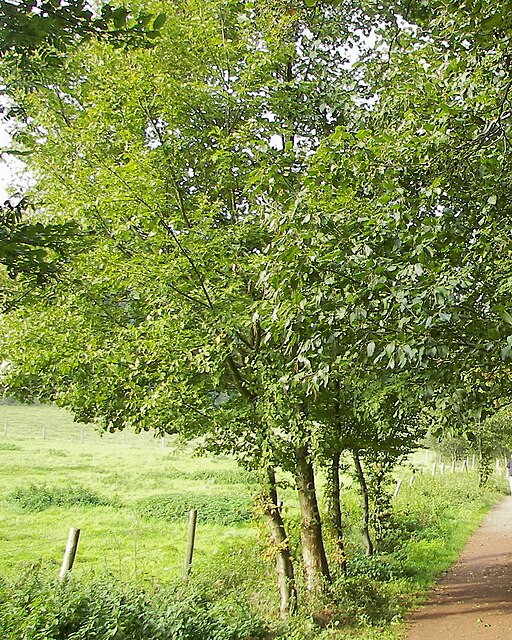
Deciduous shrub or tree, up to 12 m tall, usually 2-5 m tall, new growth short-hairy; axillary buds with short stalks; bark scaly, often lichen-covered, yellowish-brown or grey." [IFBC-E-flora]
"Leaves:
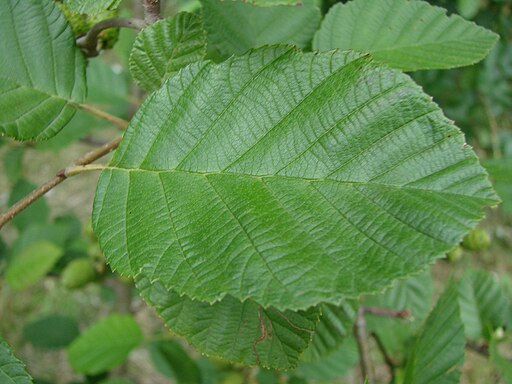
Alternate, deciduous, smooth, coarsely to irregularly toothed, the teeth pointing outwards, leaf margins not rolled under, brownish in the fall." [IFBC-E-flora]
"Flowers:
Inflorescence of male and female catkins, which open before the leaves on previous year's growth; male catkins with stalks." [IFBC-E-flora]
"Fruits:
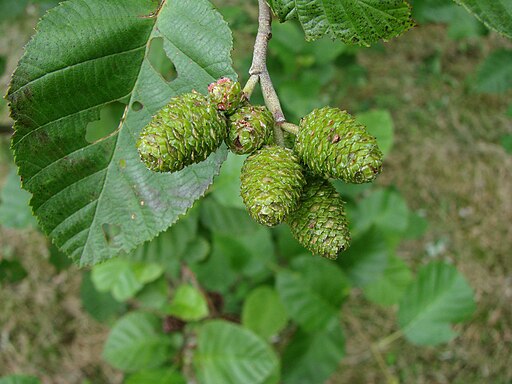
Small nutlets, without wings; female cones 1-1.5 cm long, egg-shaped."
[IFBC-E-flora]
"Habitat / Range Moist forests, streamsides, bogs and fens in the montane zone; common in BC east of the Coast-Cascade Mountains; N to AK, YT and NT, E to SK, and S to NM, AZ and CA." [IFBC-E-flora]
Range: "The native range of this species is Europe to W. Siberia and Türkiye, N. America. It is a tree and grows primarily in the temperate biome." (POWO,2026)
Pollen/Allergen: "Birch Family. Except for the alders (Alnus), all members of the Betulaceae are regarded by allergists as of only minor or moderate importance in allergy as compared with other trees. Clinical research has proved that the pollen of all species have very similar antigenic quali- ties. Moreover, the pollen granules of all genera except alder are so similar in microscopic appearance that differentia- tion is difficult. They are comparatively small (23-26 microns), flattened, with prominent protruding pores which cause the three-pored grains to appear almost triangular and the four-pored grains (alder) almost square. Large yields of all species can be obtained by merely gathering and drying the catkins." (Durham)
Dye: The bark is employed for dyeing deerskin reddish-brown.[Stevenson Zuni]
"Alnus incana (Betulaceae), commonly known as the gray or speckled alder, is distributed from coast to coast in North America (Furlow, 1979). Different parts of the tree have been used as medicines by various First Nations communities for many centuries (Johnsoton, 1987; Moerman, 1998). For example, the Blackfoot First Nations (Alberta) would use infusions of alder bark to treat scrofula caused by tuberculosis (Moerman, 1998); the Bella Coola First Nations (British Columbia) would make a poultice from the buds of Alnus incana to ease lung pains (Moerman, 1998); the Carrier peoples (British Columbia) would use a decoction of the bark as an anti-septic (RitchKrc et al., 1996); and the Cree (Ontario, Manitoba, Saskatchewan, Alberta and the Northwest Territories) would use infusions of the bark to treat diabetes (Leduc et al., 2006)." (Haoxin,Li,2010)
"Alnus incana (L.) Moench ssp. tenuifolia (Nutt.) Breitung (alder, k'oh). Leafy branches are leaned against the outer walls offish smokehouses to trap the smoke inside the house. Formerly, inner bark was boiled into a tea used for colds. (Nos. 786, 821,839)." (Holloway&Alexander,1990)
"Alnus incana (L.) Moench ssp. tenuifolia (Nutt.) Breitung (alder, k'oh). Leafy branches are leaned against the outer walls offish smokehouses to trap the smoke inside the house. Formerly, inner bark was boiled into a tea used for colds. (Nos. 786, 821,839)." [EFY Holloway]
"Although McCutcheon et al. reported that the closely related species Alnus rubra exhibited anti-mycobacterial, anti-viral and anti-fungal activities (McCutcheon et al., 1994; McCutcheon et al., 1995; McCutcheon et al., 1997), no investigations of the bioactivity of A. incana extracts have been reported. Since A. rubra and A. incana are congeneric and there is ethnopharmacological evidence that A. incana was used as treatment of TB-related symptoms, we reasoned that A. incana may possess anti- mycobacterial activity. The present study was performed to assess the anti-mycobacterial activity of A. incana bark and to identify the active constituents of the extract." (Haoxin,Li,2010)
"Alnus incana is a member of the genus Alnus MILL that consists of 35 species of trees and shrubs distributed across the Northern hemisphere with a few species extending into the Andes in the Southern hemisphere (Chen and Li, 2004; Furlow, 1979). There are a total of nine Alnus species in North America, two of which are native to New Brunswick, Canada: A. incana and A. viridis (Furlow, 1979; Hinds, 2000). The traditional therapeutic uses of six of the nine North American Alnus species, A. glutinosa, A. incana, A. rhombifolia, A. rubra, A. serrulata and A. viridis, have been documented (Moerman, 2009), with the bark of three species, A. incana (Blackfoot), A. rhombifolia (Mendocino) and A. rubra (Hesquiat, Kwakiutl, Nitinaht and Swinomish), being used as tuberculosis remedies (Moerman, 2009)." (Haoxin,Li,2010)
"Therefore, due to our keen interest in the anti-mycobacterial activity of traditionally used medicinal plants from the Canadian Maritime provinces, we investigated the anti-mycobacterial activity of the bark of A. incana. Bioassay guided fractionation led to the isolation of four lupane triterpenes: betulin [2.6 (Schulze and Pieroh, 1922) ], betulinic acid [2.4 (Ruzicka and Isler, 1936)], betulone [2.5 (Hase, 1972; Hase et al., 1981)] and lupenone [2.6 (Winterst et al., 1965)] (Figure 2.3). The molecular formulae of the triterpenes were determined from the pseudomolecular ions observed in HRESIMS (2.3, 2.4, and 2.5) and, when the absence of ionisable functional groups precluded analysis by ESIMS (Rhourri-Frih et al., 2009), APCIMS [2.6 (van der Doelen et al., 1998)]. The structures of 2.3 – 2.6 were elucidated by NMR analysis and confirmed by comparison of their NMR data and specific rotations with literature values [2.3: (Mahato and Kundu, 1994; Tinto et al., 1992), 2.4: (Mahato and Kundu, 1994; Peng et al., 1998), 2.5: (Tinto et al., 1992) and 2.6: (Ahn and Oh, 2013)]." (Haoxin,Li,2010)
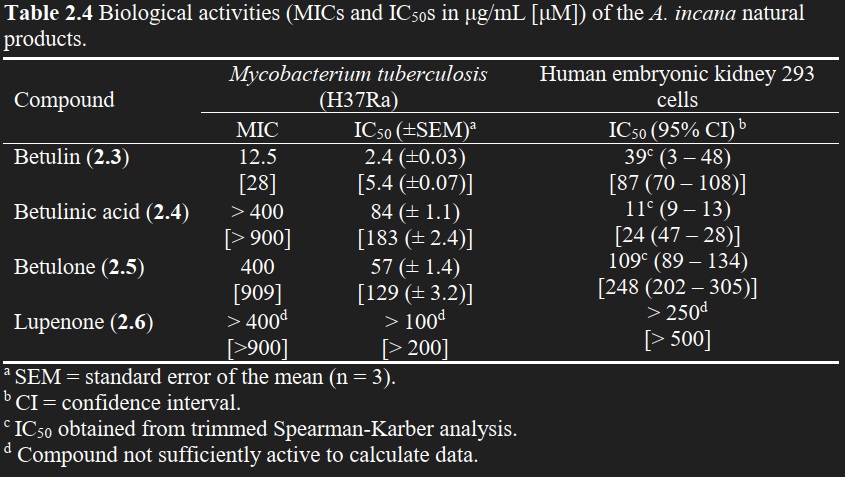
"Of the four triterpenes, betulin (2.3) demonstrated significant anti-mycobacterial activity against M. tuberculosis H37Ra whilst betulinic acid (2.4) and betulone (2.5) displayed weak activity and lupenone (2.6) was inactive (Table 2.4). The anti- mycobacterial activity of 2.3 has been reported previously (Gu et al., 2004; Rugutt and Rugutt, 2002; Wächter et al., 1999) but at lower levels than those observed in this study, probably due to the susceptibility tests being performed on different mycobacterial strains (Collins and Franzblau, 1997)." (Haoxin,Li,2010)
"The cytotoxicities of the triterpenes were tested against the human embryonic kidney cell line HEK 293 (Table 2.4) and were in agreement with literature data (Choi et al., 2006; Dzubak et al., 2006; Kuo et al., 1997; Laszczyk, 2009; Mutai et al., 2004; Nguyen et al., 2004; Puapairoj et al., 2005; Wada and Tanaka, 2005). Betulin (2.3) and betulinic acid (2.4) were moderately cytotoxic while betulone (2.5) was weakly cytotoxic and lupenone (2.6) was inactive. These data indicate that whilst betulin (2.3) exhibits modest selectivity as an inhibitor of mycobacterial growth (therapeutic index: 16), betulinic acid (2.4) was almost eight-fold more toxic to the human cells than the mycobacterial cells." (Haoxin,Li,2010)
"In conclusion, the isolation of anti-mycobacterial triterpenes from extracts of the bark of A. incana may support the traditional medicinal use of this plant by the First Nations peoples of Canada as a treatment of TB-related symptoms. Betulin (2.3) demonstrated significant activity in our anti-mycobacterial assays and it is interesting to note that birch bark (trees of the genus Betula), which also contains significant quantities of 2.3 (Krasutsky, 2006), has numerous documented therapeutic uses in North America that include the treatment of pulmonary aliments and TB (Moerman, 1998). The acute differences in the anti-mycobacterial activities observed for the four structurally related triterpenes presents some preliminary structure-activity data and suggests the functionality at carbons 3 and 28 of the lupane skeleton are critical for activity, although further SAR studies would be required to confirm these data." (Haoxin,Li,2010)
 (Haoxin,Li,2010)
"In addition, cytoxicity assays, to test the anticancer activity of methanolic extracts of Alnus incana and Shepherdia canadensis against mouse mastocytoma cells, were shown to be positive." (ritch-krc1996(1))
"Many remedies (salves and ointments) designed to prevent infections and treat burns, wounds, sores or dermatological disorders involve the use of the indigenous conifer pitches or oleoresins. Most other remedies (decoctions) employ deciduous plants, e.g. alder or soopolallie is used as the main ingredient in the 'leukemia' and 'cancer' medicines (see Table 1 - - Alnus incana)." (ritch-krc1996(1))
"For the purposes of this paper it is important to note that medical diagnoses of 'leukemia' and/or 'cancer' were made initially by the late Dr. Mooney (M.D.) of Vanderhoof, BC. One patient, an 11 year old boy (nephew of Sophie Thomas, our informant) was diagnosed with leukemia. For a month Sophie kept the child in her home and treated him on a daily basis with 'leukemia' medicine (made with Alnus incana). Following this treatment the clinic determined the child was in remission, and he remains so today, more than 20 years later. In another instance, Sophie treated a young, local Native woman diagnosed with cervical cancer. After a month of treatment with a decoction of Alnus incana and Salix sp. the cancer disappeared (Sophie Thomas, personal communication, 1991). Both these anecdotal incidents intrigued the authors, who wished to discover if there was, in fact, an 'active' ingredient in either of the 'leukemia' or 'cancer' medicines." (ritch-krc1996(1))
"Alnus incana (L.) Moench var. occidentalis (mountain alder) - "Decoction of bark shavings plus Salix sp. drunk together with anemia medicine (P. virginiana and R. idaeus) for 'leukemia'; decoction of stems plus Salix sp. for ulcers or bleeding ulcers; shavings of bark used as a poultice on sores for skin or applied warm to swollen areas; decoction of stems used as a wash for burns or sore mouth." (ritch-krc1996(1))
"The anticancer assay showed that the IC50 (72 h), the drug concentration which inhibited growth against the mouse mastocytoma cells by 50%, varied as follows: Prunus virginiana (chokecherry), 350 µg/ml; Rubus idaeus (raspberry), 350 µg/ml; Salix sp., 112 µg/ml; Shepherdia canadensis (soopolallie), 76 µg/ml; Alnus incana (alder), 6 µg/ml; taxol (positive control), 10 ng/ml. The activity of the combined extracts (Alnus incana + Salix sp. + Rubus idaeus + Prunus virginiana) was not enhanced by the combination of components and seemed to depend only on the presence of alder in it." (ritch-krc1996(1))
"These preliminary assays suggest that if the 'leukemia medicine' contains either Alnus incana or Shepherdia canadensis as the 'active' ingredient it may be effective. The other decoction ingredients (Salix sp., Rubus idaeus and Prunus virginiana) do not appear to be 'active'." (ritch-krc1996(1))
"Carrier herbal medicines are administered in a variety of ways, but decoctions are the preferred method of medicinal preparation and used routinely for ingested medicines. Generally the decoctions consist of products of a single plant species taken in small quantities (about 125 ml) several times a day for 1-2 weeks. A notable exception, however, is the 'leukemia' remedy which consists of a combination of the 'cancer' and 'anemia' medicines (Alnus incana and Salix sp. plus Prunus virginiana and Rubus idaeus) ad- ministered simultaneously. Shepherdia canadensis is often substituted for Alnus incana if the medicine is not effective." (ritch-krc1996(1))
"A literature search revealed that no work has yet been done on the cytotoxicity of Alnus or Shepherdia. Further research is now required to determine whether the 'anticancer' effect of these two species, as noted by native people, is significant." (ritch-krc1996(1))
Cultivation details
"Prefers a heavy soil and a damp situation[1, 11]. Grows well in heavy clay soils[11]. Tolerates very infertile sites[200]. A fast-growing but short-lived tree[229]. There is some confusion over the correct name of this tree with one authority citing the European species A. incana as the correct name[60]. Another report says that this species is closely related to A. incana, but distinct[229]. Some modern works treat it as a subspecies (Alnus incana tenuifolia). This species has a symbiotic relationship with certain soil micro-organisms, these form nodules on the roots of the plants and fix atmospheric nitrogen. Some of this nitrogen is utilized by the growing plant but some can also be used by other plants growing nearby[200]." [PFAF]
"The roots of the infected plants develop nodules that fix nitrogen so efficiently that a plant such as an alder can grow in the absence of combined nitrogen when nodulated. Within the nodule cells, Frankia forms branching hyphae with globular vesicles at their ends. These vesicles may be the sites of nitrogen fixation. The nitrogen fixation process resembles that of Rhizobium, in that it is oxygen-sensitive and requires molybdenum and cobalt. Some plants (Alnus, Ceanothus) have nodules as large as baseballs. The nodules of Casuarina approach soccer-ball size (Prescott et al. 1996)." (das2009)
"More recent studies were summarised by St-Laurent and Lalonde (1987) who isolated strains of Frankia from several genera including Alnus and Eleagnus as well as species within the Myricaceae including Myrica pensylvanica, M. cerifera and Comptonia peregrina. The authors were able to characterise Frankia strains from M. gale despite the fact that from 3000 test tubes inoculated, only 30 strains were isolated and these grew extremely slowly in the various media tested. Evidence of cross-infectivity was found in that twelve strains from M. gale were able to infect Alnus glutinosa while other strains were able to infect Elaeagnus angustifolia and Hippophae rhamnoides. Torrey (1990) describes M. gale as "promiscuous" since the shrub will accept infection by Frankia strains from many other host species." (Simpson et al.,1996)
"Much of the early work about host effects on EM assem-
blages focused on the genus Alnus (Neal et al. 1968; Molina
1979; Molina 1981). Plants in this genus are involved in tri- or
tetra-partite symbioses with nitrogen-fixing Frankia bacteria,
EM fungi, and arbuscular mycorrhizal fungi (Chatarpaul et al.
1989; Molina et al. 1994). Along with Frankia bacteria, EM fungi
co-dominate the roots of older Alnus individuals and play
a significant role in nutrient acquisition and growth (Mejstrik
& Benecke 1969; Molina et al. 1994; Yamanaka et al. 2003).
Relative to other well-studied plant genera, Alnus hosts a low
number of EM species, with only 50 species reported across
the entire genus (Molina et al. 1994). The pattern of lower EM
richness on Alnus has been seen in both observational and
experimental studies. Molina (1979) found that only 4 of 28 EM
species formed ectomycorrhizas with Alnus rubra using pure-culture syntheses. Similar patterns were observed in other
experiments (Molina 1981; Molina & Trappe 1982) and Alnus forests generally have lower sporocarp production and
a greater proportion of host-specific species than adjacent
forests (J.M. Trappe, pers. com.). Molecular-based studies have
confirmed that Alnus EM assemblages are less diverse than
those found on other hosts, although many of the same
genera (e.g. Tomentella, Cortinarius, Lactarius) can dominate
Alnus and other EM host forests (Pritsch et al. 1997; Beccera
et al. 2005; Tedersoo et al. 2009).
While the distinct nature of Alnus EM assemblages is
widely recognized, the mechanism(s) determining their lower
richness and higher proportion of host-specific species are
less clearly understood. The EM assemblages associated with
the closely related host genus, Betula, are more diverse and
less host-specific (Jones et al. 1997; DeBellis et al. 2006), indicating the unique composition of Alnus EM assemblages is not
characteristic of this host plant family. Molina et al. (1994)
suggested that Alnus-associated EM fungi may share a close
co-evolutionary history with this host genus. If this is true,
then one could expect Alnus-associated EM species to form
closely related monophyletic clades within their respective
genera due to a unique evolutionary relationship with Alnus.
Alternatively, if the congeners of Alnus-associated EM species
are not closely related, it would suggest that other factors play
a more important role in determining the composition of
Alnus EM assemblages. Support for the greater importance of
non-evolutionary factors was recently demonstrated by Moreau et al. (2006), who found that Alnus-associated Alnicola
species did not form a monophyletic clade within the genus.
Whether this pattern is representative of other Alnus-associated EM genera, however, is not clear." (Kennedy&Hill.,2010)
"A number of sporocarp and root tip morphotype studies have been conducted on the EM fungi associated with A. rubra (Neal et al. 1968; Molina 1979; Molina 1981; Miller et al. 1991). From these studies, it appears that A. rubra EM colonization is high and that assemblages are dominated by two Alnus-specific EM species, Alpova diplophloeus and Lactarius obscuratus. Only 11 EM species are known or suspected to associate with A. rubra across its geographic range, which is much lower than that of co-occurring EM hosts (e.g. Pseudotsuga menziesii may asso- ciate with up to 2 000 EM species (Trappe & Fogel 1977))." (Kennedy&Hill.,2010)
"Of the 385 root tips sequenced, 377 were successfully identified and 364 belonged to EM taxa. A total of 14 taxa were
encountered across all sites (Table 2). Five taxa, Tomentella sp.
3, Alnicola escharoides, Lactarius cf. obscuratus, Tomentella sp. 1,
and Alpova diplophloeus, accounted for 80 % of the EM tips
sampled. The five dominant taxa were present at all four sites,
while 5 EM taxa were unique to single sites (Table 2). Although
taxa richness varied among sites (range 6–13), the Chao2 and
rarefaction curves reached similar plateaus at each site,
indicating that the sampling effort was sufficient to capture
local site richness (Fig 1).
Comparing across the four sites, there was a significant
difference in assemblage structure (r = 0.10, p = 0.001). This
difference was significant when sites were grouped by site
age/management history (i.e. younger managed vs. older
unmanaged) (r = 0.05, p = 0.015), but not when sites were
grouped by geographic location (r = 0.02, p = 0.148). The
younger managed sites had considerably higher tree density
as well as higher Frankia frequency than the older unmanaged
sites (Table 1). In addition, total % soil nitrogen also varied
across sites, being significantly higher at the two younger
managed sites than at Fox creek (an older managed site), with
Mt. Hood (an older managed site) being intermediate (Table 1)." (Kennedy&Hill.,2010)
"Our results support the consensus that Alnus EM assemblages are distinct from those found on other EM hosts, but suggest that factors other than evolutionary history are responsible for their unique composition. Future manipulative studies involving both Frankia and multiple EM fungi would help in resolving the specific role that Frankia play in EM–host interactions." (Kennedy&Hill.,2010)
Himalayan Balsam (Impatiens glandulifera Royle): "Juglone, the best studied naphthoquinone as regards allelopathy (Ercisli et al., 2005; Rietveld, 1983; von Kiparski, Lee & Gillespie, 2007) has been shown to suppress the activity of the actinorhizal symbiont, Frankia, which is found on the roots of alder trees (Alnus glutinosa) (Vogel & Dawson, 1985). The effect varied according to strain of Frankia present. In some areas, I. glandulifera occurs in riparian woodland situations with alders. The inhibitory effect of I. glandulifera against tree seedlings in wet woodlands has been noted (Maule et al., 2000) and this may be due in part to the effects of chemical inhibition, as well as the usual competition for light, nutrients and water. Another possible effect might be on the rates of mycorrhizal infection of the tree seedlings and other competitor herbaceous plants." (Smith,2013)
"Fewer shrubs species than forbs exhibited ozone-like
injury in the field (Table 2) Alnus incana, Cornus sanguinea, Sambucus racemosa, and Vaccinium myrtillus are
common in central Europe, with Alnus incana and Vaccinium myrtillus occurring in large colonies.
Alnus incana had extensive upper-surface red-brown
stipple and bronzing on older leaves, especially in
Magura National Park in southern Poland (Fig. 2h).
Sambucus racemosa occurs commonly in forested
mountain areas. Fig. 2i depicts black stipple on Sambucus
racemosa. Alnus incana and Sambucus racemosa appear
to be good candidates for shrub ozone bioindicators.
Alnus incana, Cornus sanguinea, Corylus avellana, and
Sambucus racemosa are considered ozone-sensitive in
Switzerland (Skelly et al., 1999; VanderHeyden et al.,
2001, Zhang et al., 2001)." (manning2002)
Propagation
"Seed - best sown in a cold frame as soon as it is ripe and only just covered[200]. Spring sown seed should also germinate successfully so long as it is not covered[200, K]. The seed should germinate in the spring as the weather warms up. When large enough to handle, prick the seedlings out into individual pots. If growth is sufficient, it is possible to plant them out into their permanent positions in the summer, otherwise keep them in pots outdoors and plant them out in the spring. If you have sufficient quantity of seed, it can be sown thinly in an outdoor seed bed in the spring[78]. The seedlings can either be planted out into their permanent positions in the autumn/winter, or they can be allowed to grow on in the seed bed for a further season before planting them. Cuttings of mature wood, taken as soon as the leaves fall in autumn, outdoors in sandy soil."[PFAF]
This graph represents the unique prevalence of "Alnus" within the Eflora local research library. Penetration indicates the percentage of total documents containing at least one of the search terms.


