Google Gemini - Tables created with AI prompt. They've been briefly reviewed but may have errors. (Please scritinize)
Flowers Stem Plant
"Ajuga reptans is an evergreen Perennial growing to 0.3 m (1ft) by 0.6 m (2ft in) at a slow rate.
It is hardy to zone (UK) 6 and is not frost tender. It is in leaf 12-Jan It is in flower from May to July, and the seeds ripen from Jul to September. The flowers are hermaphrodite (have both male and female organs) and are pollinated by Bees, lepidoptera, self.The plant is self-fertile.
It is noted for attracting wildlife.
Suitable for: light (sandy), medium (loamy) and heavy (clay) soils. Suitable pH: acid, neutral and basic (alkaline) soils. It can grow in full shade (deep woodland) semi-shade (light woodland) or no shade. It prefers dry moist or wet soil and can tolerate drought." [PFAF]
"General:
Perennial herb from short rhizome and long, leafy and rooting stolon; stems simple, 10-30 cm long/tall, somewhat hairy along 2 opposite sides, 4-angled." [IFBC-E-flora]
"Leaves:
Basal leaves in a rosette, egg-shaped or oblong, 4-7 cm long, entire to somewhat toothed, rounded at tip, becoming glabrous with age, often bronzy, gradually tapering to long stalk; stem leaves to many, opposite, shorter, more or less unstalked." [IFBC-E-flora]
"Flowers:
Inflorescence of 5 to 7 flowers in axillary whorls, forming a leafy, terminal spike; upper bracts of inflorescence shorter than flowers, somewhat blue-tinted, egg-shaped, entire; corollas tubular, blue or rarely pink or white, the tube exserted, the upper lip very short, the lower lip conspicuous, 3-lobed; calyces bell-shaped, 5-6 mm long, the teeth shorter than tube." [IFBC-E-flora]
"Fruits:
Nutlets, 4 clustered together, egg-shaped, net-veined." [IFBC-E-flora]
Habitat / Range
"Mesic to dry waste places in the lowland and montane zones; rare in the lower Fraser Valley; introduced from Europe." [IFBC-E-flora]
Hazards
"The plant is said to be a narcotic hallucinogen that is known to have caused fatalities(274)." [PFAF] "No health hazards or side effects are known in conjunction
with the proper administration of designated therapeutic
dosages." [PDR]
"in the last decades, the
use of these species in folk medicine has drastically diminished because of their presumed toxicity.
This is mainly associated to a particular class of natural compounds known as
neo-clerodane diterpenoids (Firenzuoli et al., 2002), whose
presence in Ajuga species is well reported (Camps et al.,
1987)." (frezza2018)
Conversely, the total absence of neoclerodane diterpenoids which are, in turn, chemotaxonomic
markers at the species and genus level and are very toxic compounds, provides a
phytochemical rationale for the possible ongoing use of this particular sample in the ethnopharmacological field.
For this, due to the high variability in the
biosynthesis of these metabolites, the necessity of an accurate phytochemical analysis of the raw materials for botanical
employments is extremely required." (frezza2018)
Edible Uses
Young Shoots - Raw7. [PFAF] Edible - leaf and young stem - taste is poor [ARA 12.1]
Medicinal Uses
"Bugle has a long history of use as a wound herb and, although little used today, it is still considered very useful in arresting haemorrhages and
is also used in the treatment of coughs and spitting of blood in
incipient consumption4,254,268." [PFAF]
"Ajuga reptans L. is aplant used in the
traditional medicine of many countries
from the centre and, especially, the eastern
part of Europe. The extracts obtained from
bugle (Ajuga reptans L.) are used due to
the content of polyphenols of the
flavonoidic and polyphenolcarboxylic acids type (due to its antioxidant, vascular
and antimicrobial qualities), as well as of
iridoids (antiinflamatory and wound
healing) as antidiarrhoeaic, antileucoreic,
hepatoprotecting and vulnerar. Unlike
bugle, blue bugleweed, Ajuga genevensis
L., is used only in our country as a
substitute of the medicinal species, as, due
to the fact that it is not very demanding as
to the pedoclimatic conditions, it is largely
outspread in the wild flora." (Ghita et al.,2011)
Whole Plant
"Aromatic, astringent and bitter4,7,9. The plant is usually applied externally7. It is also commonly used fresh in
ointments and medicated oils238." [PFAF] "Unproven Uses: Internally, Bugle is used as an astringent for
inflammation of the mouth and larynx. It is also used for
gallbladder and stomach disorders. Externally, the plant is
used for the treatment of wounds." [PDR]
Harvesting: "The whole herb, gathered in May and early June, when the leaves are at their best, and dried." "The roots
have by some authorities been considered more astringent than the rest of the plant."(ModHerb-Online) "It is harvested as it comes into
flower in late spring and dried for later use4,7." [PFAF] "The medicinal parts are the aerial parts
collected during the flowering season and dried" [PDR] Effect: "In its action, it rather resembles digitalis, lowering the pulse and lessening its frequency, it allays
irritation and cough, and equalizes the circulation and has been termed 'one of the mildest and best narcotics in the world.' It
has also been considered good for the bad effects of excessive drinking."(ModHerb-Online) Homeopathic: "A homeopathic remedy is made from the whole plant.7 It is widely used in various preparations against throat irritations and especially in the treatment of mouth ulcers[7]." [PFAF] Antihemorrhagic: "In herbal treatment, an infusion of this plant is still considered very useful in arresting haemorrhages and is employed in coughs and spitting of blood in incipient consumption and also in some biliary disorders, a wineglassful of the infusion - made from 1 OZ. of the dried herb to 1 pint of boiling water - being given frequently."[ModHerb-Onlne] Laxative: "Green (Universal Herbal, 1832) gives as his opinion that 'the leaves may be advantageously used in fluxes and disorders of that kind as they do not, like many other plants of the same value, produce costiveness, but rather operate as gentle laxatives.' He states that a decoction of the herb has been employed for quinsy."[ModHerb-Onlne]
"Mode of Administration: Bugle is used topically, in alcoholic
extracts, as a water infusion and in teas."[PDR]
"Ajuga reptans, aerial parts for gall bladder, and stomach disorders. Externally,
for inflammation of mouth and larynx." (Tasic,2012)
Ajuga reptans L. - Leaves - Reconstituent, Fever, Asthma, Gout (26) - Vasoconstrictor (27) (Naghibi,2005)
Historical Usage
"Culpepper had a great opinion of the value of the Bugle and says, if the virtues of it make you fall in love with it (as they will if you be wise) keep a syrup of it to take
inwardly, and an ointment and plaster of it to use outwardly, always by you. The decoction of the leaves and
flowers in wine dissolveth the congealed blood in those that are bruised inwardly by a fall or otherwise and is
very effectual for any inward wounds, thrusts or stabs in the body or bowels; and is an especial help in wound
drinks and for those that are liver-grown, as they call it. It is wonderful in curing all ulcers and sores,
gangrenes and fistulas, if the leaves, bruised and applied or their juice be used to wash and bathe the place
and the same made into lotion and some honey and gum added, cureth the worse sores. Being also taken inwardly
or outwardly applied, it helpeth those that have broken any bone or have any member out of joint. An ointment
made with the leaves of Bugle, Scabious and Sanicle bruised and boiled in hog's lard until the herbs be dry and
then strained into a pot for such occasions as shall require, it is so efficacious for all sorts of hurts in the
body that none should be without it."
(ModHerb-Online)
"There is one British record, from Sussex,135 of the ostensibly folk use of Ajuga
reptans for wounds, a purpose for which it was anciently valued on account
of its considerable astringency.
Two Irish records add support to that. In the early nineteenth century,
country people in Londonderry are said to have applied the juice to bruises
as those were at the stage of turning black.136 And in Sligo—if, as seems likely,
glas-na-coille was a mishearing of glasnair choille (the name in Irish)—it supplied till much later a cure for whitlows
reckoned infallible.137" [MPFT]
"A. reptans has a long tradition of use in the folk medicine
of several countries of the world (Israili and Lyoussi, 2009).
This is due to the fact that this species is well known to possess many important pharmacological properties (Chiej,
1984) which are due to the several classes of natural compounds that have been identified in the plant (Israili and
Lyoussi, 2009; Glyad, 2002; Manguro et al., 2006). Actually,
this regards the entire Ajuga L. genus whose species are
known to possess antihypertensive, antidiabetic, diuretic,
antibacterial, antifungal, antimalarial, antimicrobial, anti-inflammatory, antitumor, antioxidant, insecticide and laxative
effects (Frezza et al., 2017)." (frezza2018)
Pharmacology
Antioxidant & Antibacterial
"The aim of this study was to evaluate the polyphenols and iridoids from Ajuga reptans (Lamiaceae) flower extracts, and their
antioxidant and antibacterial activities." (Toiu et al.,2017)
"Ajuga reptans is one of the
most important species of the genus, known in ethno-
medicine for its anti-inflammatory, wound healing,
hepatoprotective properties [4, 9, 12]. Abroad studies
on Ajuga plants have led to the identification of
several bioactive compounds: phytoecdysteroids,
triterpenes, sterols, diterpenes, anthocyanidins, iridoids,
flavonoids, etc. [4, 9]. The quality of the natural
products depends on the geographic origin, due to
variations in pedoclimatic conditions, and the phyto-
chemicals could vary in terms of quality and
quantity [6]." (Toiu et al.,2017)
"Accordingly, the study aimed to evaluate the bioactive
compounds (polyphenols and iridoids) and the
pharmacological effects of A. reptans flowers
harvested from Romanian spontaneous flora, for a
proper use in phytotherapy." (Toiu et al.,2017)
"...the plants were harvested at full
flowering stage from wild populations, in June 2015 (Cluj County, Romania)." (Toiu et al.,2017)
"The obtained results revealed that A. reptans
flowers contain high amounts of active compounds,
particularly polyphenols and iridoids, which are
generally used as important antioxidants and
antimicrobial agents [1, 7]." (Toiu et al.,2017)
"To the best of our knowledge, this is the first report
on polyphenols and iridoids from A. reptans
flowers extracts; only the aerial parts of the plant
were previously analysed by Ghita et al. [3], and
smaller amounts of flavonoids (0.455 - 0.563%
expressed in luteolin), and total iridoids (1.078 -
1.983% expressed in aucubin) were determined in
the aerial parts collected from different Romanian
regions." (Toiu et al.,2017)
"The ethanol extract of A. reptans
flowers demonstrated a high antioxidant activity
(IC50 ≤ 50 µg/mL) [1]." (Toiu et al.,2017)
"The MIC values obtained for the ethanol extract
ranged from 0.78 to 6.25 mg/mL and from 1.56 to
6.25 mg/mL for the methanol extract of A. reptans
flowers. Both extracts had comparable activities
against some bacterial strains: Pseudomonas
aeruginosa, Listeria monocytogenes, Escherichia
coli and Salmonella typhimurium. A. reptans
ethanol extract had the best antimicrobial activity
against S. aureus (MIC value = 0.78 mg/mL and
MBC value = 1.56 mg/mL), and against Pseudomonas
aeruginosa (MIC value = 3.12 mg/mL and MBC
value = 6.25 mg/mL). For both extracts we observed
that the less susceptible strains were: Listeria
monocytogenes, Escherichia coli and Salmonella
typhimurium. According to Salvat et al., vegetal
extracts with MIC value less than/or around 0.5
mg/mL indicate good antimicrobial effect [11].
Thus, our results showed moderate antibacterial
activity for A. reptans flower extracts against the
tested bacterial strains." (Toiu et al.,2017)
"The comparative analysis of the extracts showed
the presence of important biologically active
compounds in Ajuga reptans. The research presents
for the first time the content in natural compounds
(polyphenols and iridoids), and the biological
activities of A. reptans flower extracts, with
superior results revealed for the ethanol one.
According to the obtained results, Ajuga reptans
could be considered as a valuable source of natural
products and it may have a good potential for
possible applications in food and pharmaceutical
industries." (Toiu et al.,2017)
Ajuga genevensis L. and A. reptans L.
"This research was designed to investigate the phytochemical profile (e.g. iridoids, polyphenolic
compounds, phytosterols), as well as the biological potential (antioxidant, antibacterial, antifungal,
anti-inflammatory properties) of two selected Ajuga species collected from different regions of
Romanian spontaneous flora. The main compounds identified in A. reptans aerial parts extracts were
8-O-acetylharpagide, isoquercitrin and β-sitosterol, whilst in A. genevensis were 8-O-acetylharpagide,
luteolin and campesterol. The extracts were screened for their antioxidant potential using different
methods (DPPH, TEAC, EPR) and the results showed a good activity, in accordance with the
polyphenol content (18–26 mg GAE/g dw). The antifungal activity on the tested strains was
good. The determination of few parameters linked with the inflammatory mechanism allowed the
assessment of in vivo anti-inflammatory potential. Ajuga reptans and A. genevensis ethanol extracts
had anti-inflammatory activity through lowering the oxidative stress, phagocytosis, PMN and total
leukocytes. The best anti-oxidative and anti-inflammatory activity was observed for the Ajuga reptans
100 mg dw/mL extract when compared with diclofenac, thus the dose could be correlated with
the pharmacological effect. These findings provide substantial evidence that both selected Ajuga
species have the potential to be valued as sources of phytochemicals in effective anti-inflammatory
herbal preparations." (Toiu et al.,2019)
"Ajuga genevensis L. (blue bugle, blue bugleweed or Geneva bugleweed) is a pubescent plant
widespread in many countries of Europe. “Suliman” is the Romanian name of the species and
traditionally is used for sedative, antihemorrhagic and anti-inflammatory effects, as well as for its
wound-healing and epithelization capacity in topic remedies [22]. Also, the plant is used for its
remarkable property to precipitate the proteins from digestive tract, in treatment of diarrhoeal diseases." (Toiu et al.,2019)
"Methanol and ethanol have been proven as effective solvents for extraction of phenolic compounds.
As they have quite similar polarity, the bioactive compounds extracted in these solvents are very similar,
therefore the detected differences between the methanol and ethanol extracts were only quantitatively
ones. The main reason for this concept was that usually, the methanol extract is obtained for the
purpose of phytochemical analysis, in laboratory, thus a rapid and simple extraction method is useful
for the characterization of vegetal products (30 min at 60 ◦C), whereas the extract used in phytotherapy
is generally the ethanol one, obtained by maceration at room temperature (7 days by maceration).
Taking this into account, we intended to compare the results obtained by the two methods in order to
evaluate if the theoretical method (with methanol) will extract the same compounds and in similar
concentration and if those results could be extrapolated into practice, to ensure a more practical
approach of our study." (Toiu et al.,2019)
"The phytochemical evaluation of the six samples collected in different harvesting time and
locations showed that the aerial parts of A. genevensis and A. reptans harvested in April from Cluj
County contain the highest number of polyphenolic compounds and iridoids, respectively." (Toiu et al.,2019)
"In the present research, only A. reptans 100 mg dw/mL extract
proved to have important anti-inflammatory effects by reducing NO synthesis and it was comparable
with that induced by diclofenac. Because the effects on NOx were not always correlated with the in vitro
antioxidant tests, it may be presumed that the antioxidant activity was not significantly involved." (Toiu et al.,2019)
"The most abundant compounds identified in the aerial parts of Ajuga reptans were isoquercitrin
β-sitosterol and 8-O-acetylharpagide. The presence of these active substances may be associated
with assessed biological activities. Using various methods, the antioxidant effect of Ajuga reptans and
Ajuga genevensis extracts was evaluated and good antiradical capacities were evidenced, depending
firstly on the nature of the extraction solvent and secondly on the different harvesting time and
place. The antimicrobial assays revealed that Ajuga reptans petroleum ether extract presented potent
activity against A. niger and C. albicans. The exhibited antifungal effects might be due to the presence
of phytochemicals, primarily to 8-O-acetylharpagide, the main iridoid glycoside. By monitoring
some inflammation parameters, it was possible to determine the in vivo anti-inflammatory activity
and a probable mechanism of action could be suggested with the help of these findings. The Ajuga
reptans 100 mg dw/mL extract displays important anti-inflammatory effects by reducing NO synthesis
and it was comparable with those determined by diclofenac. The results indicate variations between
the Ajuga species extracts, therefore, the necessity of selecting not only the proper solvent but
also the appropriate harvesting time of plant material, to extract the highest possible amounts of
phytochemicals. The anti-inflammatory effect of Ajuga reptans and A. genevensis ethanol extracts was
observed by decreasing the oxidative stress, phagocytosis, PMN and total leukocytes. The Ajuga
reptans 25 mg dw/mL and 100 mg dw/mL extracts presented higher anti-oxidant and anti-inflammatory
activities, comparable with diclofenac. These findings support the usage of Ajuga reptans and Ajuga
genevensis as anti-inflammatory agents in ethnobotanical medicine. Also, the results indicate that
both selected Ajuga species have the potential to be valued as an important source of bioactive
compounds in new herbal preparations with anti-inflammatory activity. Further in vivo experiments
are recommended in order to develop effective and safe medicine-based phytopharmaceuticals." (Toiu et al.,2019)
Antibacterial
"All extracts showed comparable activities against
four bacterial strains: Escherichia coli, Listeria monocytogenes, Pseudomonas aeruginosa and Salmonella
typhimurium. Ajuga genevensis and A. reptans ethanol extracts exerted the best antimicrobial activity
against S. aureus with MIC = 0.78 mg/mL, MBC = 1.56 mg/mL for both species. Escherichia coli, Salmonella
typhimurium and Listeria monocytogenes were the less susceptible strains for methanol extracts obtained
from both species, with a MBC value of 12.5 mg/mL." (Toiu et al.,2019)
Antifungal
"The best susceptibility to
the Ajuga reptans petroleum ether extract was shown by Candida albicans (0.006 mg/mL and 0.012 mg/mL
for minimum inhibitory concentration (MIC) and minimum fungicidal concentration (MFC). From the
same Ajuga species, following highest sensitivity was shown to chloroform and ethanol extracts, with
MFC = 0.025 mg/mL and MIC = 0.012 mg/mL, respectively and the most resistant strains against
ethanol extract of Ajuga genevensis being Penicillium fumiculosum and Aspergillus niger (MFC 0.2 mg/mL).
In their article, Kawamura and Ohara, (2005) stated that high level of iridoids contained within the
plant extracts might be linked to the antifungal activity of these extracts. All extracts of aerial parts
from Ajuga species showed high concentrations of iridoid glycosides, mainly 8-O-acetylharpagide." (Toiu et al.,2019)
Oncology (Folk): Cancer (General/Uterus), Indurations, Tumors.
Organ Specific: Disorders of the Liver, Lung, and Spleen.
Dosage Information:
While often not specified in standard pharmacological texts, traditional preparations include boiling 60 g of the herb in 1 liter of water, specifically cited for biliary disorders.
View Original Citations
Ethnobotanical Summary
Activities & Regional Sources
(Duke3)
Activity
Country/Region
Reference Source
Astringent
Turkey
Steinmetz, E.F. 1957
Cancer
UK (Wales)
Hartwell, J.L. 1967-71
Carminative
Turkey
Steinmetz, E.F. 1957
Deobstruent
-
Uphof, J.C. Th. 1968
Diuretic
Turkey
Steinmetz, E.F. 1957
Fever
Turkey
Steinmetz, E.F. 1957
Hemostat
-
Uphof, J.C. Th. 1968
Jaundice
-
Uphof, J.C. Th. 1968
Liver
-
Uphof, J.C. Th. 1968
Lung
-
Uphof, J.C. Th. 1968
Narcotic
Turkey / General
Steinmetz, 1957; Uphof, 1968
Rheumatism
-
Uphof, J.C. Th. 1968
Spleen
-
Uphof, J.C. Th. 1968
Stomachic
Turkey
Steinmetz, E.F. 1957
Styptic
Turkey
Steinmetz, E.F. 1957
Tonic
Turkey
Steinmetz, E.F. 1957
Vulnerary
Spain / Turkey
Font Quer, 1979; Steinmetz, 1957
BUGLE (Ajuga reptans L.) +"Activities (Bugle) — Antipyretic (f; EFS); Astringent (1; PHR); Carminative (f; CRC; EFS); Deobstruent (f; CRC); Diuretic (f; CRC); Hemostat (f; CRC; EFS); Narcotic (f; CRC); Stomachic
(f; CRC; EFS); Tonic (f; EFS); Vulnerary (f; CRC)."
Select Indications (Bugle) — Bleeding (f; CRC; EFS; MPG); Cancer (f; CRC; JLH); Cancer, uterus (f; JLH); Fever(f; CRC; EFS); Gas (f; CRC; EFS); Induration (f; CRC; JLH); Tumor (f; JLH);
Ulcer (f; CRC); Uterosis (f; CRC; JLH); "Dosages (Bugle) — Not given (PHR). 60 g herb boiled in 1 liter water for biliary disorders (CRC)." [HMH Duke]
Phytochemicals
"The plant contains digitalis-like substances (these are commonly found in Digitalis species and are used in treating
heart complaints) and is thought to possess heart tonic properties268." [PFAF]
Insecticide: "The effects of crude methanolic extracts of Ajuga remota and A. reptans (Labiatae) were
tested in the laboratory against the developing stages of Aedes aegypti, A. togoi and Culex
quinquefasciatus. The extracts caused severe inhibition of development when young fourth
instar larvae were exposed until adult emergence. The rate of mortality was correlated with
extract's concentrations and the duration of exposure. The different mosquito species showed
almost the same sensitivity to an extract of A. remota. Extracts of A. reptans (LC(90)-values
from 98 to 128 ppm when tested against A. togoi) were more efficient than those of A. remota
(LC(90)-values from 384 to 700 ppm). Among the different plant parts, effectiveness of the
derived extracts was roots over leaves over shoots over flowers. Treatment of developing
stages caused a reduced quality of the emerged female adults. The results point out that the
ecdysteroid regulation of the mosquitoes is influenced by the effective compounds of the
extracts" (Marcard et al.,1986)
Steroids
Phytoecdysteroids
Chemical
Part
Reference
24-Norcyasterone
Plant
JSG
29-Norsengosterone
Plant
JSG
Ajugalactone
Plant
JBH, JSG, [PDR]
Ajugareptansone
Plant
JSG
Ajugasterone
Plant
JSG
Beta-Ecdysone
Plant
JSG
Cyasterone
Plant
JBH
Polypodine-B
Plant
JBH, JSG
Note: Phytoecdysteroids like ajugalactone are known "Phytoecdysones" often found in this genus.
Sources: Material for these tables is from (Duke2) and [PDR] (See original notes)
Glycosides
Iridoid Glycosides & Ajugols
Chemical
Part
Reference
Ajugol
Plant
JSG, [PDR]
Ajugoside
Plant
JSG, [PDR]
Asperulin
Plant
HHB
Aucubin
Plant
YYB
Harpagide
Plant
JSG
Harpagide-Acetate
Plant
JSG
Reptioside
Plant
JSG
Phenolics
Phenols & Pigments
Chemical
Part
PPM (Max)
Reference
Cyanidin
Plant
-
CRC
Delphinidin
Plant
-
CRC
Rosmarinic Acid
Plant
-
[PDR]
Caffeic Acid Deriv.
Plant
-
[PDR]
Tannin
Plant
150,000
CRC, HHB
Miscellaneous
Secondary Principles
Diterpene Bitter Principles: [PDR] Identified as key constituents of the plant.
Tannin Content: Significant accumulation at 15% (150,000 ppm). (Duke2)
Volatile Fraction
Essential Oil Composition
Component
Percentage (%)
Method
Reference
(3Z)-Hexenol
0.1 ± 0.0
RI, MS
(frezza2018)
n-Hexanol
0.1 ± 0.0
RI, MS
(frezza2018)
1-Octen-3-ol
40.7 ± 3.8
Co-I, RI, MS
(frezza2018)
3-Octanol
0.5 ± 0.1
RI, MS
(frezza2018)
Benzene acetaldehyde
0.1 ± 0.0
RI, MS
(frezza2018)
(2E)-Octen-1-ol
0.4 ± 0.1
RI, MS
(frezza2018)
n-Octanol
1.3 ± 0.2
Co-I, RI, MS
(frezza2018)
Linalool
13.7 ± 1.8
Co-I, RI, MS
(frezza2018)
n-Nonanal
0.7 ± 0.1
RI, MS
(frezza2018)
(2E)-Nonen-1-al
0.2 ± 0.0
RI, MS
(frezza2018)
2-Methylbenzofuran
4.6 ± 0.7
RI, MS
(frezza2018)
3-Decanone
0.1 ± 0.0
RI, MS
(frezza2018)
α-Terpineol
0.1 ± 0.0
Co-I, RI, MS
(frezza2018)
Geraniol
0.1 ± 0.0
RI, MS
(frezza2018)
(2E)-Decenal
0.1 ± 0.1
RI, MS
(frezza2018)
(2E,4Z)-Decadenial
tr
RI, MS
(frezza2018)
p-Vinyl guaiacol
0.1 ± 0.0
RI, MS
(frezza2018)
(2E,4E)-Decadenial
0.3 ± 0.1
RI, MS
(frezza2018)
epi-α-Cadinol
0.1 ± 0.0
RI, MS
(frezza2018)
α-Cadinol
0.1 ± 0.0
RI, MS
(frezza2018)
n-Tetadecanoic acid
0.1 ± 0.0
RI, MS
(frezza2018)
Hexahydrofarnesyl acetone
1.7 ± 0.2
RI, MS
(frezza2018)
Pentadecanoic acid
0.1 ± 0.0
RI, MS
(frezza2018)
n-Hexadecanoic acid
11.7 ± 2.0
Co-I, RI, MS
(frezza2018)
n-Heneicosane
0.4 ± 0.1
Co-I, RI, MS
(frezza2018)
Methyl linolenate
3.3 ± 0.6
RI, MS
(frezza2018)
trans-Phytol
2.5 ± 0.5
Co-I, RI, MS
(frezza2018)
Linoleic acid
1.3 ± 0.4
Co-I, RI, MS
(frezza2018)
n-Octadecanoic acid
0.1 ± 0.0
Co-I, RI, MS
(frezza2018)
n-Docosane
0.1 ± 0.0
Co-I, RI, MS
(frezza2018)
n-Tricosane
1.5 ± 0.3
Co-I, RI, MS
(frezza2018)
n-Tetracosane
0.1 ± 0.0
Co-I, RI, MS
(frezza2018)
n-Pentacosane
1.8 ± 0.4
Co-I, RI, MS
(frezza2018)
n-Hexacosane
0.2 ± 0.0
Co-I, RI, MS
(frezza2018)
n-Heptacosane
5.2 ± 0.9
Co-I, RI, MS
(frezza2018)
n-Octacosane
0.2 ± 0.0
Co-I, RI, MS
(frezza2018)
n-Nonacosane
2.9 ± 0.5
Co-I, RI, MS
(frezza2018)
n-Triacontane
0.1 ± 0.0
Co-I, RI, MS
(frezza2018)
n-Untriacontane
0.4 ± 0.1
Co-I, RI, MS
(frezza2018)
Phytochemical Context (frezza2018):
Total Volatiles Identified: 97.2% (frezza2018)
Essential Oil Yield: 0.027% (w/w) (frezza2018)
Chemical Profile: Dominated by aliphatics (74.0%) rather than terpenoids (16.6%), a pattern used for
chemotaxonomic identification (frezza2018)
Note: No potentially toxic neo-clerodane diterpenoids were identified in this sample (frezza2018).
Note: tr = trace amount (below 0.1%). Identification based on Retention Index (RI), Mass Spectroscopy (MS),
and comparison with analytical standards (Co-I) (frezza2018)
Glycerol derivatives identified via NMR and MS techniques.
(frezza2018)
Phytochemical Analysis (2010)
Iridoid & Polyphenol Content
Comparative quantitative determinations of active principles in Ajuga reptans L. and Ajuga genevensis L. herba (100g).
Sample Code
Location
Iridoids (g aucuboside %)
Flavonoids (g luteolin %)
Polyphenolic acids (g chlorogenic acid %)
Ajuga reptans L.
AR1
Guranda
1.329 ± 0.0097
0.501 ± 0.0034
1.581 ± 0.0022
AR2
Baisa
0.471 ± 0.0047
1.078 ± 0.0032
1.690 ± 0.0016
AR3
Bicaz-Baraj
1.983 ± 0.0010
0.455 ± 0.0066
1.870 ± 0.0013
AR4
Potoci
1.673 ± 0.0085
0.563 ± 0.0019
1.744 ± 0.0031
Ajuga genevensis L.
AG1
Albesti
0.698 ± 0.0012
0.988 ± 0.0059
2.020 ± 0.0074
AG2
Draslea
0.839 ± 0.0011
0.8763 ± 0.0036
1.876 ± 0.0061
AG3
Stauceni
0.641 ± 0.0071
0.561 ± 0.0093
1.825 ± 0.0002
AG4
Baisa
1.033 ± 0.0081
0.417 ± 0.0055
1.593 ± 0.0035
AG5
Grozavesti
0.9512 ± 0.0099
0.545 ± 0.0043
1.733 ± 0.0006
Key Findings:Ajuga reptans samples generally showed higher concentrations of iridoids, while Ajuga genevensis
samples tended to have a higher overall polyphenol content. Analysis confirms both interspecific (genetic) and intraspecific (environmental) chemical variability. (Ghita et al., 2011)
"Caffeic acid derivatives: including rosemary acid" [PDR]
A single sample of A. reptans L. collected in Central Italy was
analyzed for both its essential oil and its polar fraction composition. The volatile fraction was mainly characterized by
the mushroom-like 1-octen-3-ol whereas the ethanolic
extract evidenced the presence of 32 compounds among
which martynoside (4) and D-mannitol (14) represent new
phytochemicals for the species and for the genus, respectively. Most of the detected compounds, in both analysis, are important from the
pharmacological and nutraceutical points
of view since they are all endowed with interesting properties. This may explain some of the ancient
traditional medicinal uses of the plant." (frezza2018)
"This single sample of A. reptans revealed itself to be an
essential oil-poor species (oil yield 0.027%) just like all the
species belonging to the Ajugoideae subfamily (Venditti
et al., 2016a; Acquaviva et al., 2018)." (frezza2018)
"Under the pharmacological standpoint, most of the
above-mentioned compounds are able to exert interesting
and important medicinal activities. In particular, among
them, the secondary alcohol 1-octen-3-ol, is an environmental mediator in attracting flies and mosquitoes which are useful for mushroom reproduction. Nevertheless it can also act
as a chemical defense against predators, fungal and insect
pests (Combet et al., 2006). Moreover, martynoside (4) shows
interesting antiestrogenic and cytotoxic activities (Papoutsi
et al., 2006; Saracoglu et al., 1995). Ajugoside (5) is a very
good antioxidant (Erukainure et al., 2014) and harpagide (6)
and 8-O-acetyl-harpagide (7) exert strong antitumor, antiinflammatory and antibacterial properties (Guarrera, 2005;
Konoshima et al., 2000). Indeed, the saccharides and the
amino acids are well known to exert nutraceutical properties." (frezza2018)
"To the best of our knowledge, martynoside (4) represents
a new compound for the species while D-mannitol (14) is a
new compound in the genus. In fact, martynoside (4) has
been evidenced only in two Ajuga spp. (Sadati et al., 2012; Shimomura et al., 1987) and in Stachys affinis Bunge (Venditti
et al., 2017b)." (frezza2018)
"The comparative phytochemical study
on the two Ajuga species, Ajuga reptans
and Ajuga genevensis aimed to highlight
the qualitative and quantitative variations
of the iridoidic, flavonoidic and
polyphnolic acids fractions in dry vegetal
material. We noticed that, in both species,
the individuals originated from populations
developed in different locations, present
variations of larger or more restricted
limits especially quantitative and less
qualitative for the same group of secondary
metabolites." (Ghita et al.,2011)
"Ajuga reptans proved to be richer in
iridoidic components of the harpagide type
(antiinflamatory, hepatoprotecting and
immunomodulating) while Ajuga
genevensis is slightly richer in polyphenols
(antioxidant and diuretic). Out of the
polyphenolic components, by HPLC, we
identified and quantified chlorogenic acid,
caffeic acid, apigenol and luteolin-7-O-
glucoside." (Ghita et al.,2011)
"The
highest level of hydroxylated polyenoic fatty acids was found
in Ajuga reptans (101.1 Ug/g dry mass)." (kuhn1989)
Cultivation
"Prefers a humus-rich, moisture retentive soil and partial shade28,31,200. Does well in marshy soil and in the spring meadow24. Grows
well in dry shade187, 190 and is fairly drought tolerant once established, though it shows distress in severe drought190. Plants do not
always ripen their seeds in Britain, they spread freely by runners, however, and soon form an extensive patch in suitable conditions4. A
number of forms have been selected for their ornamental value, several of them are variegated and these are used especially as ground cover
plants for dry shade187. A purple-leafed form, 'Atropurpurea' does well in full sun so long as the soil is not dry208. A good bee and
butterfly plant24." [PFAF]
Groundcover
"A good ground-cover for a position in semi-shade200, forming a carpet and rooting as it spreads208. Fairly fast growing but it does not
always smother out weeds and can become bare at the centre if not growing in good conditions197." [PFAF]
Ajuga is rabbit resistant [ARA 16.3]
Propagation
"Seed - sow spring or autumn in a cold frame. The seed usually germinates in 3 - 4 weeks at 10oC33, though it can be erratic238. Prick out
the seedlings when they are large enough to handle and plant them out in the summerK. Division of runners at almost any time of year.
Very easy, the divisions can be planted straight out into their permanent positions if required." [PFAF]
Arbuscular mycorrhizal
"The arbuscular mycorrhizal (AM) fungi colonizing plants at a woodland site in
North Yorkshire (UK) have been characterized from the roots of five plant species
(Rubus fruticosus agg. L., Epilobium angustifolium L., Acer pseudoplatanus L., Ajuga
reptans L. and Glechoma hederacea L.), and identified using small-subunit rRNA
(SSUrRNA) gene amplification and sequencing." (helgason2002)
"Archaeospora trappei and Glomus
sp. UY1225 had variable effects on the host plants, conferring a range of P uptake and
growth benefits on Lysimachia nummularia and T. scorodonia, increasing P uptake
whilst not affecting biomass in Ajuga reptans and Glechoma hederacea, and failing to
form mycorrhizas with A. pseudoplatanus." (helgason2002)
"Scutellospora dipurpurescens was the only fungus to
increase Ajuga biomass, although it did not increase
plant P content significantly and plants colonized by
it fell on the same concentration trajectory as the
controls (Fig. 4b). In contrast, plants colonized by
the other three fungi all had elevated tissue P con-
centration and total P content, but showed no growth
response." (helgason2002)
"The
data in Table 1 suggest that the AM families are not
distributed homogeneously among the five host-plant
species. Scutellospora was not found in Acer, Ajuga
or Glechoma; Glomus was rare or absent from Rubus
and Epilobium; and Acaulospora was only found twice
(10%) in Acer despite being the most frequently
sequenced genus." (helgason2002)
"Three of the four fungi used were from our trap-
culture programme. Glomus sp. UY1225 has occurred
in several trap-culture attempts, and has been found in
many plant species in Pretty Wood including Ajuga
(from whose roots it was originally isolated),...." (helgason2002)
"On this basis, there were four main types of plant
response to fungi (Table 2; Fig. 4):
(a) roots uncolonized and no growth response: NUEP
as in control plants (e.g. Glechoma with S. dipurpurescens)
(b) roots uncolonized, NUEP reduced (i.e. higher tissue
P concentration), seen in Acer with all fungi except G. hoi
(c) roots colonized, growth stimulated, but NUEP
reduced and P concentration increased; this occurred
in Acer with G. hoi, in Lysimachia with all fungi except
possibly S. dipurpurescens, and in Teucrium with all
fungi except possibly A. trappei
(d) roots colonized, P content increased with no
change in biomass, resulting in high tissue P concen-
tration and low NUEP.
This pattern occurs in Glechoma and Ajuga with all
fungi except S. dipurpurescens." (helgason2002)
"Pattern (d) occurred only in those plants with a
stoloniferous growth habit (Glechoma and Ajuga)." (helgason2002)
Uses of Other Ajuga Sp.
"More than one hundred species and fifty varieties and
subspecies of Ajugu plants are unevenly distributed over
the world [ 11. While in America there are recorded only
three newly introduced species, and two endemic species
in Australia, these Labiatae are especially abundant in
China, Korea and Japan and also widespread in Europe." (camps1993)
"They have been used in folk medicine in various cultures
and several interesting medicinal properties, such as
antifebrile, anthelmintic, hypoglycaemic and vulnerary
effects have been attributed to them. Traditionally, in
China some Ajuga plants have been used to treat inflammation (2)." (camps1993)
"The genus Ajuga, a member of the Lamiaceae family,
is comprised of more than 300 species of annual and
perennial herbaceous flowering plants mainly distributed throughout the temperate regions of Asia, Europe,
Australia, North America and Africa. These species have
been used as common house plants and are called bugle
or bugleweed. They are mainly characterized by the color
and shape of the flower. For example, the flower of Ajuga
reptans is somewhat tall and blue, while that of Ajuga
decumbens is short and purple. Many of these plants are
of medicinal importance and are traditionally used as
remedies for rheumatic fevers, dysentery, malaria, hypertension, diabetes and gastrointestinal disorders, as well
as anthelmintic, astringent, febrifuge diuretic, antifungal and anti-inflammatory agents 1. The genus Ajuga
has attracted attention since the report in 1976 that Ajuga
remota grown in Kenya is not attacked by African armyworms and contains three moderately strong antifeedants
2. Since then, reports of the isolation of neoclerodanes
and phytoecdysteroids, as the insect allelochemicals
responsible for antifeedant activity from this genus, have
appeared 3. Several species of this genus have been
chemically studied and a series of bioactive metabolites,
including phytoecdysteroids, diterpenoids and iridoids
have been isolated and characterized. Biological investigations demonstrate that some of these compounds
display antibacterial 4, antifungal 5, antiplasmodial
6, cytotoxic, antitumor promoting 7, vasoconstricting
8, insect molting inhibitory, insect antifeeding 9 and
enzyme-inhibitory 10 activities. This review summarizes
phytochemical progress of the genus Ajuga covering the
literature up to 2014. In addition, some biological activities of compounds obtained from this genus are also listed." (qing2017)
Ecdysteroids (Arthropod steroid hormones)
(camps1993)
"Ajugarins I-III were the first insect antifeedants, isolated by I. Kubo and coworkers 4, from Ajuga remota.
At a later stage, the same authors isolated from the same
plant two other related structures, ajugarins IV and V,
and also clerodin 9-11." (camps1993)
"The main structural characteristics are the but-13-en-15,16-olide ring and oxygen substituents at particular sites of the
decalin system. ... these patterns are important to elicit
antifeedant activity." (camps1993)
"The antifeedant activities of ajugarins I-III were investigated by the host-plant leaf disk method [12] using
Zea mays (maize) for the monophagous Spodoptera exempta and Ricinus communis for the polyphagous S.
littoralis. Activity levels of 100 ppm against S. exempta
and 300 ppm against S. littoralis were found. The other
two ajugarins exhibited no antifeedant activities, and
only moderate insecticidal and growth inhibitory activities were reported for ajugarin IV against different insects." (camps1993)
"Also from A. reptans we isolated two minor components (with the yields from dry plant indicated) ajugarep
tansone A (8 ppm) and ajugareptansone B (6 ppm) with
neo-clerodane structures closely related to ajugarins." (camps1993)
"We also studied Ajuga iva collected in Beer-Sheva
(Israel) and isolated four new neo-clerodanes named
ivains I-IV (300,10,40 and 60 ppm yield from dry plant,
respectively)." (camps1993)
(camps1993)
"Although the insect antifeedant activity of these series
of compounds is presumed from their structural similitudes with ajugarins, only the activities of ajugacumbins
A-C are mentioned in the literature [33]. In the host-
plant leaf disk method using Boehmeria nivea with larvae
of Pureda vesta Fabricius, the lowest effective concentration for antifeedant activity was 50 ppm for ajugacumbin
A and 200 ppm for the other two compounds." (camps1993)
"When we investigated the total content and relative
composition of phytoecdysteroids in different parts of
normally grown or in oitro micropropagated A. reptans
plants 68, that content was extremely low ( ~/- 60 ppm/dry wt) in leaves of these micropro-
pagated plants, whereas that of the corresponding roots
was the highest detected in our experiments
( ~/- 4000 ppm/dry wt). The relative composition was very
variable in the different materials analysed, the major
components being ajugalactone (45-57%) in leaves of
wild plants and 29-norcyasterone (51%) in roots of
micropropagated plants, respectively." (camps1993)
"From all the data obtained of our in vivo and in vitro
experiments, we conclude that ecdysteroid production is
related to organised macrostructures in the plant and
occurs in the roots. The contents in the different materials
studied seem to indicate a relationship between growth
and ecdysteroid production." (camps1993)
"As far as the biosynthesis of phytoecdysteroids in
A. reptans is concerned, two major biosynthetic pathways appear to be operating, side chain dealkylation and
5-hydroxylation,..." (camps1993)
Effects of Ecdysteroids
"... there may be a wide varia-
tion in the susceptibility of different insects to these
compounds. Insects possess diverse abilities to absorb,
detoxify and efficiently eliminate phytoecdysteroids, ...." (camps1993)
"...it has been shown that phytoecdysteroids
exhibited different activities in vertebrates 3. Among
them, it is worth mentioning: the stimulation of protein,
an anabolic activity in murine liver 71. the suppression
of the hyperglycaemia induced by either glucagon or
alloxan in diabetic mice 72, the inhibition of the
development of hypercholesterolaemia and hyperlipidaemia produced by Triton WR-1339 in rats and
antiatherosclerotic action in rabbits 73, the increase of bile
acids and bilirubin levels and decrease of cholesterol
content in the bile secretion of normal rats or rats with
induced toxic hepatitis 74, the normalization of the
respiratory chain and the terminal pathway of electron
transport in hepatocytes of rats with induced hepatitis
75 and the potentiation of the effects of insulin 76." (camps1993)
Ecdysteroid Production
"Cell cultures of different species of Ajuga have been obtained. Synthesis of
20E and turkesterone was established in both callus and suspension cultures of
A. turkestanica, the 20E concentration in the cells being several times higher than
that in the roots and leaves of the plants, whereas the turkesterone concentration
was somewhat lower than in the intact plant (Lev et al., 1990). A number of studies
has been carried out on sterile culture and A. reptans shoots and roots cultivated
separately (Tomás et al., 1992, 1993; Camps and Coll, 1993). The plants cloned
in vitro retained the ecdysteroid composition inherent to both intact wild plants and
glasshouse plants. Ajugalactone and cyasterone (C29-ecdysteroids), 29-norsengosterone and
29-norcyasterone (C28-ecdysteroids) and 20E (C27-ecdysteroid)(20-hydroxyecdysone) were
found. PolB was not found in plants in vitro, but was detected in intact plants.
The ecdysteroid content in the roots of the plants in vitro amounted to 0.4% of
the dry weight and was 1.5–2.5 times higher than that in intact plant roots. The
ratio of C28/C29-phytoecdysteroids in intact and in in vitro cloned plants was substantially different. A. reptans roots were established to be the site of ecdysteroid
biosynthesis." (Dinan et al.,2009)
"All of the
A. reptans hairy root clones were shown to synthesize 20E, norcyasterone, cyasterone and isocyasterone, which are characteristic ecdysteroids of intact plant roots.
The component ratio was also similar to that in intact plant roots, with 20E prevailing. There was a positive correlation between the ecdysteroid content and the clone
growth-rate. Selection resulted in the isolation of the rapidly growing Ar-4 clone,
where the 20E concentration amounted to 0.14% of the dry weight. When growing
the Ar-4 clone in an Airlift-type fermenter for 45 days, the weight of the culture
increased 230-fold, and the 20E content was as much as 0.12% of dry weight.
Regenerated plants cultivated from high-producing hairy root clones of
A. reptans var. atropurpurea were shown to have higher ecdysteroid accumulation
than untransformed regenerants (Tanaka and Matsumoto, 1993). The transformed
plants had root/total plant weight ratios of 68–75%, compared to 50% for normal
regenerant plants, the ecdysteroid content being as high as in the parent clones.
Thus, the possibility of obtaining microclonal reproduction of modified plants with
an increased ability to produce ecdysteroids was demonstrated, with the associated
possibility of creating phytophagous insect-resistant plants." (Dinan et al.,2009)
"The presence of ecdysteroids
was not detected in A. reptans callus cultures by Tomás et al. (1992). However,
trace amounts of 20E were detected in A. reptans callus and suspension cultures
by Mboma et al. (1986)." (Dinan et al.,2009)
"Genetically modified rhizogenic culture of A. reptans var. atropurpurea also
proved to be a boon for ecdysteroid biosynthesis research...." (Dinan et al.,2009)
"A. reptans plants are characterized by a low ecdysteroid content. However,
in contrast to Rh. carthamoides callus cultures which are incapable of synthesizing
significant amounts of ecdysteroids, strains of A. reptans cultures were obtained
which surpassed both plants cultivated in vitro and wild plants in their ecdysteroid
content. The content of 20E was found to increase significantly during long-term
(for 9 years) cultivation of S. coronata and A. reptans callus cultures. This is likely
to be a result of cell differentiation over time. Thus, ecdysteroid-producing cell
cultures were shown to retain their biosynthetic abilities to different extents. In
young callus cultures with high or moderate ecdysteroid content (S. coronata and
Rh. carthamoides), a decrease in ecdysteroid synthesis occurs. After being introduced
into culture, species with low ecdysteroid content, such as A. reptans match, or even
surpass, intact plants as far as ecdysteroid accumulation is concerned. Moreover,
ecdysteroid accumulation dynamics in cell cultures of phylogenetically distant spe-
cies is similar in spite of the difference in morphological features." (Dinan et al.,2009)
Pytochemicals in Genus
Characteristic Markers
Phytoecdysteroids (qing2017)
No.
Name
Source
Part
1
Cyasterone
A. decumbens, A. turkestanica, A. iva, A. chia, A. chamaepitys, A. multiflora, A. taiwanensis, A. nipponensis, A. macrosperma var. breviflora
whole plant, aerial part, whole plant, aerial part
263-266
Decumbeside A - D
A. reptans, A. decumbens
whole plant
267
Harpagide
A. iva, A. reptans
aerial part, whole plant
Antioxidant Phenolics
Flavonoids (qing2017)
No.
Name
Source
Part
288
Luteolin
A. chia, A. lupulina
aerial part, whole plant
290
Apigenin
A. chia, A. multiflora, A. forrestii
aerial part, aerial part, whole plant
291
Naringin
A. iva
aerial part
296
Quercetin
A. lupulina
whole plant
300
Kaempferol
A. taiwanensis
whole plant
Miscellaneous Compounds
Polyketides & Alkaloids (qing2017)
No.
Name
Source
Part
331-333
Ivade A - C
A. iva, A. pseudoiva
leaf
334-338
Hizivaide A - E
A. pseudoiva
leaf
343
Ligularinine
A. parviflora
whole plant
344
Senecionine
A. parviflora
whole plant
313
Esculetin
A. decumbens
whole plant
315
Vanillic acid
A. decumbens, A. taiwanensis
whole plant
321
Bis(2-ethylhexyl) phthalate
A. multiflora
aerial part
"In the flora of Romania [18] there are mentioned 8 species and 2 hybrids of Ajuga,
out of which A. reptans L. is known as a medicinal plant for its bitter-astringent principles,
a reason according to which it has recently been offered more attention, along with its close
kin – A. genevensis L." (Hemcinschi et al.,2009)
"The flourishing aerial parts
of Ajuga reptans L. and Ajuga genevensis L. from the Lamiaceae family, common in
orchards, hay fields and pastures, known under the name of bugle and blue bugleweed
respectively are characterized by the content of tanins and iridoids, due to which, in folk
medicine, both species are used, in the forms of infusions and tinctures, as antidiarrhoeaic,
antileucoreic, vulnerar and hepatoprotecting remedies [1, 2]." (Hemcinschi et al.,2009)
"Both species contain iridoids (harpagid, 8-O-acetilharpagid, ajugol), antocianosides,
tanins, polyphenolcarboxilic acids (rozmarinic acid, caffeic acid), flavonoids [3], volatile
oils, rezins, ozes, and also diterpens with a neo-clerodan skeleton, generically called
ajugavensins [4, 5]." (Hemcinschi et al.,2009)
"As the iridoidic compounds of the harpagoside/harpagide type are extremely
interesting for therapeutics due to the anti-inflammatory and pain killing actions, the only
used vegetal product in the present being the secondary tubers of Harpagophytum
procumbens originating from South Africa (indicated in the treatment of the chronic forms
of inflammatory rheumatism, and also in chronic gastro-intestinal inflammatory affections),
the identification of a possible European source of such active principles would be an
interesting challenge." (Hemcinschi et al.,2009)
"The TLC analysis for the absolute methanol extracts indicated the fact that in case of
Ajuga reptans there are 3 major iridoid components while in case of Ajuga genevensis there
are only two (Fig. 18, Pl. IV); likewise, from the quantitative point of view the iridoids
seem to be better represented in bugle compared to blue bugleweed." (Hemcinschi et al.,2009)
"If, as we may notice, aucubin is absent from both species (as also shown by
literature),...." (Hemcinschi et al.,2009)
"In case of the iridoids (Fig. 20, Pl. IV), the quantitative differences in the same
species, Ajuga reptans L., are, as can be seen, extreme: the Tg. Neamt 1 population has an
iridoid content of over 1.5g, while population 2, harvested in the same restricted perimeter,
not greater than 200 m², contain by 2 and a half times less non-volatile monoterpens; the
Guranda population with over 2% proved to be the richest. For Ajuga genevensis L., the
intraspecific differences are much smaller, fact also seen by comparing the 4 Mascateni
populations (Fig. 21, Pl. V)." (Hemcinschi et al.,2009)
"On the other hand, if we compare the flavonoid, polyphenolcarboxilic acid and
iridoid contents determined in Ajuga reptans L. and Ajuga genevensis L. individuals
prelevated from the same place (Baisa), where we assume the existence of the same
pedoclimatic offer, the discriminating factor being, for sure, the genetic heredity, we get the
image in Fig. 22, Pl. V." (Hemcinschi et al.,2009)
"As we see, the flavonoids are found in the Baisa populations of the two mentioned
Ajuga species, in the smallest quantity, followed by the polyphenolcarboxilic acids, and the
highest concentration is that of the iridoids." (Hemcinschi et al.,2009)
"If the flavonoids are quantitatively close for the two species, the content of the
polyphenolcarboxilic acids is much raised at Ajuga reptans L. compared to A. genevensis,
and the iridoids present almost equal values." (Hemcinschi et al.,2009)
"The results of our researches showed intra and inter-specific variations of certain
anatomical and chemical characters in the investigated Ajuga species.
The histo-anatomical differences refer especially to the vegetative organs, being
represented by the frequency and localization of the hairs (non-glandular and glandular),
the development and lignification degrees of the mechanical tissues (periphloemic
sclerenchymatous fibre cordons, libriform fibres from the secondary xylem), the ratio
secondary phloem/secondary xylem, the number of xylem cells per surface unit, the
endoderm and stele type in the root (polyarch in the adventitious roots formed on the
rhizome and diarch or triarch in their branching), the thickness of the limb and the number
of palisadic cell layers.
For the populations belonging of the investigated Ajuga species there is a certain
intra- and inter-specific chemical variation, referring especially to the values registered for
iridoids.
Nevertheless, to establish the clear interdependence regarding the quantitative
variations of the active principles, one should achieve some multiannual studies (with a
constant harvesting of the individuals in the same locations) with the simultaneous
monitoring of both the climatic conditions of each year and the composition of the soil.
We consider that if future researches will establish that, especially for Ajuga reptans
L, the total iridoidic is in its greatest part constituted of derivates of the harpagid type, it
would be possible that the species furnish convenient raw material to obtain some
preparations useful to the part of the population with LOHAS orientation (Life of Health
and Sustainability)." (Hemcinschi et al.,2009)
Activities of genus & Phytochemicals contained within it
Systemic Effects
Core Biological Activities
Activity
Mechanism / Target
Specific Compounds or Species
Antifeedant
Strong behavioral deterrent against larvae
Neoclerodanes (104, 156, 175-177), Areptin B (172)
Anti-inflammatory
COX-1 & COX-2 inhibition; Lipoxygenase inhibition
Lupulin A (156), 6-Deoxyharpagide (268), Bractic acid (342)
Hypoglycemic
Reduction of plasma glucopyranose levels
Ajuga iva (Aqueous extract)
Antimalarial
Inhibition of P. falciparum (Chloroquine-sensitive/resistant)
8-O-Acetylharpagide (262), Ajugarin I (89), Ergosterol 5,8-endoperoxide (81)
Vasorelaxant
NO-mediated and NO-independent relaxation
Ajuga iva (Aqueous extract)
Pathogen Defense
Antimicrobial & Antifungal Properties
Activity
Target Pathogen
Effective Agent
Antibacterial
P. aeruginosa, E. coli, S. aureus
Lupulin A (156), Lupulin E (160)
Antifungal
T. mentagrophytes, M. gypseum
Ajuga remota (Petroleum ether/Methanol extracts)
Antimycobacterial
Mycobacterium tuberculosis
Ergosterol 5,8-endoperoxide (81)
Cellular & Enzyme Modulation
Cytotoxicity & Enzyme Inhibition
Target
Effect
Compound / Extract
Cholinesterase
AChE & BChE Inhibition
14,15-Dihydroajugapitin (104), Lupulin A (156)
Jurkat T Cells
Inhibition of viability; cell differentiation
Ajugasalicioside C (73), Ajugasalicioside A (70)
MCF-7 (Breast Cancer)
Inhibition of cell proliferation
Ajudecumin A (235), Ajudecumin C (237)
HeLa (KB Cells)
Significant cytotoxic activity
Ajugasalicigenin (72)
View Original Citations
Antifeedant and larvicidal activity
"Compounds 95, 104, 151, 156, 342, 352 and 353 were
A neoclerodane 103 was isolated from the leaves of
A. decumbens as a feeding stimulant for Athalia rosae
ruficornis 75. Three new neoclerodanes 164, 168, 169
were isolated from the aerial parts of A. reptans cv.
catlins giant. Insect antifeedant testing revealed that
168 has significant activity against sixth stadium larvae
of Spodoptera littoralis 67. A series of active clerodanes
104, 156, 175–177 were isolated from the acetone extract
of A. pseudoiva leaves by bioassay-guided chromatog-
raphy. The behavioral responses of Spodoptera littoralis larvae to all clerodanes showed strong antifeedant
activity at 100 to 1 mg/L. In addition, this study also
indicated that a methoxy group at C(15), either in the
α- or β-position, might decrease antifeedant activity 9.
Manguro and co-workers tested larvicidal activity of the
extracts of A. remota using second instar Aedes aegypti
larvae 123. The ethyl acetate extract is toxic with LC50
value of 5.30 μg/L, while the methanol extract displays
weak toxicity with an LC50 of 65.94 μg/L. Compound 81,
obtained from the ethyl acetate extract, is the active
component with an LC50 value of 4.40 μg/L." (qing2017)
Antimicrobial activity
"Compounds 95, 104, 151, 156, 342, 352 and 353 were
Compounds 156–161 are six new neoclerodanes isolated
from Ajuga lupulina. The diterpenoids 156 and 160 show
strong activity against Pseudomonas aeruginosa and
Escherichia coli (inhibitory zones are 3–5 mm and 3.5–
4.5 mm, respectively, at a concentration of 0.02 mg/mL).
In addition, 156 displays weak activity against Staphylococcus aureus (1.5 mm). The antibacterial activity of 161
against P. aeruginosa (2.1 mm) and E. coli (2.0 mm) is poor
compared to 156 and 160. Compound 157 exhibits weak
antibacterial activity against S. aureus and E. coli (1.2 mm)
4,99. In 2001, Kariba tested the extracts of A. remota
for in vitro antifungal activity. The petroleum ether and
methanol extracts exhibit antifungal activity against the
dermatophytic fungi Trichophyton mentagrophytes and
Microsporum gypseum 5. Ergosterol 5,8-endoperoxide
81, isolated from the methanol extract of A. remota, shows
activity against Mycobacterium tuberculosis 55." (qing2017)
Antimalarial activity
"Compounds 95, 104, 151, 156, 342, 352 and 353 were
Ajuga remota is commonly used as medicinal herb for
malaria treatment in Kenya. Three isolates, 81, 89 and
262, were tested for their in vitro antiplasmodial activity.
Compound 89 is moderately active against a chloroquine-
sensitive (FCA 20/GHA) strain of Plasmodium falciparum,
with an IC50 of 23.0 μm, compared to a 0.041 μm IC50 for
chloroquine. Compared to 89, compound 262 is approximately 3 times as potent. Compound 262 is also equally
potent towards chloroquine-sensitive (FCA 20/GHA) and
chloroquine-resistant (W2) strains 6. An excellent review
article summarizes antimalarial activity of compounds
contained in A. remota and A. bracteosa 135." (qing2017)
Anti-inflammatory activity
"Compounds 95, 104, 151, 156, 342, 352 and 353 were
Gautam et al. tested a 70% ethanol extract of A. bracteosa
whole plants in a mice acute inflammation model based
on topical application of TPA. The result showed that the
extract exhibits a remarkable and dose-dependent anti-
inflammatory activity at 0.5 and 1.0 mg/ear. In addition,
it showed a significant in vitro COX-1 and COX-2 inhibitory
activity at 25 and 50 μg/mL. Among the isolates from the
bioactive extract, compound 156 exhibited the highest
inhibition of COX-1, and compound 268 displayed the
highest inhibition of COX-2 136. The compounds 342,
352, 353 exhibited remarkable inhibition of lipoxygenase.
Compound 342 was more active than baicalein (IC50 = 22.4
μm) with an IC50 of 10.0 μm 10." (qing2017)
Hypoglycemic activity
"Compounds 95, 104, 151, 156, 342, 352 and 353 were
Ajuga iva has been used as traditional medicine to control
diabetes mellitus for many centuries. In 2002, a study to
examine the hypoglycemic effect of A. iva was carried out,
and the results demonstrated that A. iva aqueous extract
exhibits strong hypoglycemic activity. Lyophilized aqueous
extract of A. iva whole plant was found to decrease plasma
glucopyranose levels of streptozotocin-induced diabetic
rats from 337 to 102.2 mg/dL after 6 h of oral administration. Furthermore, repeated oral administration signifi-
cantly reduced plasma glucopyranose levels after 1 week
of treatment (112 mg/dL at 1 week vs. 337 mg/dL at the
baseline values) 137." (qing2017)
Cytotoxic activity
"Compounds 95, 104, 151, 156, 342, 352 and 353 were
Compounds 70–75 are five new sterol glycosides isolated
from a methanol extract of the aerial parts of A. salicifolia.
Their cytotoxicity against HeLa cells (KB), human T cell
leukemia (Jurkat), and peripheral mononuclear blood
cells (PMBC) have been evaluated. Compounds 70–74
significantly inhibit the viability and growth of Jurkat T
cells at concentrations below 10 μm. Compound 73 is the
most active substance with an IC50 values of 3 μm, followed by 70 (IC50 = 6 μm). An additional glucopyranose
substituent leads to weaker cytotoxicity against Jurkat T
cells, as observed for 71 (IC50 = 10 μm) and 74 (IC50 = 8 μm).
Compound 70 induces cell-cell contacts in a Jurkat T cell
population, and remarkably up-regulated mRNA levels of
the cell-cycle regulator cyclin D1, which might be an indication for cell differentiation 53. In 2003, Akbay and co-
workers investigated the cytotoxicity of sterols obtained
from A. salicifolia against KB (HeLa) and Jurkat T cancer
cells. This study demonstrated that compound 72 is active
against KB cells with an IC50 of 1 μg/mL, while the corresponding 3-O-β-glucopyranoside, compound 76, is less
potent (IC50 = 13 μg/mL) 54. Four new A. decumbens abietane diterpenoids, 235–238, were evaluated for in vitro
inhibition of cell proliferation. The diterpenoids 235 and
237 exhibit moderate cytotoxic activities against MCF-7
cells (human breast cancer), with IC50 values of 19.4 and
12.5 μm, respectively 7." (qing2017)
Cholinesterase inhibitory activity
"Compounds 95, 104, 151, 156, 342, 352 and 353 were
obtained from A. bracteosa, and their enzyme-inhibitory
potential was evaluated. The diterpenoids 95, 104, 151
and 156 display inhibitory activity against cholinesterase
(AChE and BChE) with IC50 values in the range of 14.0–
35.2 μm for AChE and 10.0–19.0 μm for BChE, respectively.
Compound 104 is the most active against cholinesterase
while 156 is comparatively less active, indicating that the
presence of a MeO group at C(15) increases the cholinesterase inhibitory activity 10." (qing2017)
Antioxidative activity
"Bouderbala and co-workers studied the effect of A. iva
aqueous extract on lipid peroxidation and antioxidant
enzyme activity in hypercholesterolemic rats. The results
showed that A. iva extract is more effective at improving RBC antioxidant capacity relative to that of tissues.
In addition, A. iva aqueous extract can reduce oxidative
stress, which may prevent lipid peroxidation in hypercholesterolemic models by increasing antioxidant enzyme
activity 138." (qing2017)
Vasorelaxant activity
"El-Hilaly and co-workers investigated vascular activity of
A. iva aqueous extract in normotensive Wistar rats. The
aqueous extract displayed NO-mediated and NO-independent vasorelaxing properties in vitro. The A. iva extract
contains more than one active compound. One of these
compounds is responsible for inhibition of noradrenaline
evoked contraction. Another compound was identified in
vitro as a transient NO-dependent relaxation 8." (qing2017)
Ajuga decumbens Thunb.
"Ajuga decumbens Thunb is a member of Labiatae family and widespread in China, Korea and Japan.
This plant possesses diverse pharmacological activities, such as anti-inflammatory, antitumor,
antibacterial, antiviral, cytotoxic, as well as insecticidal activities. Several compounds have been
isolated from A. decumbens, which display a wide spectrum of biological and pharmacological activities." (Ni et al.,2015)
"The genus Ajuga is widely spread throughout the
temperate regions of Europe, Asia, Australia,
North America, and Africa [1,2]; this group
contains many medicinal plants such as A.
decumbens Thunb., A. bracteosa Wall. ex Benth,
A. forrestii Diels, A. nipponensis Makino, A.
ciliata, etc. Studies have shown that Ajuga spp.
are widely used for the treatment of
hypertension, hyperglycemia, pneumonia, acute
and chronic pharyngitis [3-6]. Additionally, Ajuga
has been used in Iranian traditional medicine for
the treatment of joint pain, gout, and jaundice [7].
All plants of A. decumbens have been utilized as
a kind of folk medicine for a long time in China
and Japan owing to their antibacterial, anti-
inflammatory, antitumor and antiviral activities [8-
11]. Many compounds whose structures have
been characterized were isolated from A. decumbens. Diterpenes and iridoid glycosides
are the main bioactive compounds for the
treatment of chronic pelvic inflammation and
hysteromyoma [12,13]. It is urgent to understand
the structure-activity relationships between the
chemical constituents and biological activities of
this plant with regard to its enormous social and
economic implications. The primary objective of
this review is to comprehensively report the
various biological properties of A. decumbens as
well as its main chemical constituents." (Ni et al.,2015)
Predominant Compounds
Diterpenes (Neo-clerodane & Abietane) (Ni et al.,2015)
Chemical Name
Plant Part / Source Notes
Ajugacumbins A, B, C, D, E, F, G, H, J
Whole plant / Ethanol & Chloroform extracts
Ajugamarins A1, A2, G1, H1, F4
Whole plant
Ajugatakasins A & B
Whole plant extracts
Ajugaside A
Whole plant extracts
Ajugadecumbenins A & B
Whole plant
Ajugaciliatin J
Whole plant
Ajuganipponin B
Whole plant
Ajugarin I
Whole plant
15-epilupulin A
Whole plant
6-O-deacetylajugamarin
Whole plant
Ajugamarin A1 chlorhydrin
Whole plant
Dihydroclerodin
Aerial parts
Clerodinins C & D
Aerial parts
Ajuforrestins A & B
Aerial parts
Ajudecumins A, B, C, D
Aerial parts
Defense Metabolites
Iridoid Glycosides (Ni et al.,2015)
Chemical Name
Plant Part / Source Notes
Decumbeside A, B, C, D
Whole plant / Methanol extract
Reptoside
Whole plant / Methanol extract
8-Acetylharpagide
Whole plant / Methanol extract
Harpagide
Whole plant
Other Major Groups
Flavonoids & Ecdysteroids (Ni et al.,2015)
Chemical Name
Group
Luteolin
Flavonoid
Apigenin
Flavonoid
Acacetin
Flavonoid
5, 7-Dihydroxy-4'-methylflavone
Flavonoid
Ajugalactone
Ecdysteroid
Ecdysteroids 51-58 (Unnamed series)
Ecdysteroid (Flowering whole plant)
Secondary Principles
Miscellaneous Components (Ni et al.,2015)
Phenethyl alcohol glycosides: Including compound 61 (New discovery).
Megastigmadienones: Compounds 64, 66, and 67 identified from aerial parts.
"Previous investigations of A. decumbens indicate
that its constituents can be classified into four
categories, viz, diterpenes, iridoid glycosides,
flavonoids and ecdysteroids. Among them,
diterpenes and iridoid glycosides are
predominant. Neo-clerodane diterpenes mostly
show insecticidal [14,15], antibacterial [16,17],
antimalarial [18], and anticancer activities [19]." (Ni et al.,2015)
Iridoid glycosides
"Iridoids are a class of secondary metabolites
found in a wide variety of plants primarily served
as a defense against herbivores or against
infection by microorganisms [33]. The iridoids
glycosides were firstly found by Takeda et al obtained six iridoids glycosides from the MeOH
extract of A. decumbens, elucidated as
Decumbeside A-D (39 - 42), reptoside (43) and
8-Acetylharpagide (44) [34]. Similarly, Harpagide
(45) was isolated from A. decumbens [25]." (Ni et al.,2015)
Flavonoids
"Flavonoids are another major group of
compounds isolated from A. decumbens. Jin et al
isolated luteolin (46) from the ethanol extract of
A. decumbens [35]. In 2005, 5, 7-Dihydroxy-4’-
methylflavone (47) was obtained from the MeOH
extract [36]. Other flavonoids, named Apigenin
(48) and Acacetin (49), were isolated [28,32]." (Ni et al.,2015)
Ecdysteroids
"In 1970, Ajugalactone (50) was
isolated from A. decumbens [38]. Up to 1999,
eight ecdysteroids (51 - 58) were obtained from
the flowering whole plant [39]." (Ni et al.,2015)
Others compounds
"Two known compounds (59 - 60), a new
phenethyl alcohol glycoside (61) were isolated
from A. decumbens [25]. In 1999, two
compounds (62 - 63) were obtained and
structurally characterized from the flowering
whole plant of A. decumbens [39]." (Ni et al.,2015)
Immune & Cellular Response
Anti-inflammatory & Cytotoxic Effects (Ni et al.,2015)
"Various extracts or purified compounds from A.
decumbens exhibit diverse biological
characteristics, which are anti-inflammatory,
antitumor, antibacterial, antivirus, cytotoxic, as
well as insecticidal activities. Herein, we describe
the biological activities as well as its active
extracts or compounds." (Ni et al.,2015)
Anti-inflammatory activities
"Several studies investigated that the whole plant
of A. decumbens possessed the anti-
inflammatory effects described in the famous
pharmacy book of China, Dictionary of Chinese
Materia Medica [42-43]. The inhibitory activities
on LPS - induced NO production of diterpenes
were evaluated, compounds (22-26, 28) showed
inhibitory effects, indicating these substances
were expected to be useful as effective potential
anti-inflammatory agents [29,30]. Similarly,
Ajugacumbin J (31) and ajugacumbin D (4)
exhibited the inhibitory activities of LPS-induced
NO production in RAW 264.7 macrophages with
an IC50 value of 46.2 and 35.9 mM, respectively
[31]. The ethanol extracts of A. decumbens
extracts (KE) improved the balance of bone
resorption and bone formation, showing anti-
inflammatory effects. The results exhibited that
KE were beneficial for sufferers of bone and joint
disease [44]. Total flavonoids of A. decumbens
(TFA) had a therapeutic effect on chronic serum
sickness glomerulonephritis (CSS-GN) rats by
increasing SOD activity, lowering MDA and
inhibiting lipid peroxidation [45]." (Ni et al.,2015)
Antitumor activities
"The inhibitory effects of these compounds (14,
43-45, 59-61) on EBV activation induced by TPA
were examined via a primary screening for anti-
tumor activity, and the results showed that 8-
Acetylharpagide (44) also exhibited the strongest inhibitory effect on EBV
activation [25]. In addition, compound 44
exhibited an anti-proliferative effect on mouse
hepatic tumor using N-nitrosodiethylamine (DEN)
as an initiator and phenobarbital (PB) as a
promoter [46]. Takasaki et al also found that
compounds 44 and 52 had potent antitumor-
promoting activities on mouse skin in vivo two-
stage carcinogenesis procedure. Furthermore,
compound 44 also exhibited potent
chemopreventive activity in a mouse pulmonary
tumor model [39]. Compounds 35 - 37 exhibited
moderate inhibitory activity on the proliferation of
human breast cancer MCF-7 cells [32]. A.
decumbens extracts showed anticancer and
antimetastatic effects towards breast cancer
through regulating the expression of MMPs and
TIMPs [47]. Additionally, A. decumbens extracts
exhibited an anti-proliferative effect on lung
cancer A-549, liver cancer SMMC-7721 and
Sarcoma S18 [48,49]. What is more, water
extracts of A. decumbens significantly inhibited
the proliferation of HepG2 cells in a dose-
dependent manner [50]." (Ni et al.,2015)
Antibacterial activities
"A. decumbens extracts exhibited significantly
antibacterial effect by inhibiting the growth of S.
aureus, S. epidermidis, K. pneumonia, E. coli
and P. aeruginosa [51]. Besides, through the
analysis of antibacterial activity in vivo and in
vitro, water extracts of A. decumbens also
possessed antibacterial activities against
Streptococci [52]." (Ni et al.,2015)
Antivirus activities
"Ma et al found that the whole plant of A.
decumbens showed potent antiviral activities
against respiratory syncytial virus (RSV) with an
IC50 value of 131.6 μg/ml [53]. In addition, A.
decumbens water extracts could inhibit infectious
bronchitis virus (IBV) in vitro with the
concentration of 750 - 1500 mg/ml [54]." (Ni et al.,2015)
Cytotoxicity
"Myrotheciumone A isolated from A. decumbens
was found to exert cytotoxicity via induction of
apoptosis in cancer cell lines [55]." (Ni et al.,2015)
Insecticidal activities
"Min et al reported that these compounds (1-4, 9-
10) from the ethanol extract of A. decumbens
displayed growth-inhibitory properties against
insects [20,22]. Similarly, compound 11 also
exhibited significant insecticidal activities [23]." (Ni et al.,2015)
Misc uses of other species
Ajuga bracteosa - "The leaf paste is used orally against constipation" (Ahmed et al.,2013)
Ajuga macrosperma - Wall. ex Benth. "Whole plant pounded up and applied directly to a sore gum, tooth, or cheek." (Anderson,1986)
Ajuga genevensis & Ajuga reptans - Internal as tea - Respiratory tract (Vogl et al.,2013)
Ajuga
chamaepitys
subsp.
tridactylites
(Ging. ex
Benth.) P.H.
Davis - Jaundice, Joints pain, Gout (25) (Naghibi,2005)
"Aerial parts of a group of 50 plant species of south-eastern Spain, belonging to different botanical
families, were harvested in 1995 and 1996. From each sample three extracts were obtained using organic solvents of
increasing polarity. Activity was tested in bioassays using the stored grain pest Tribolium castaneum Herbst
(Coleoptera: Tenebrionidae). Larval growth inhibition was significantly induced when extracts were incorporated into
the diet at 0.05%. The most active plants were: Anabasis hispanica, Senecio lopezii, Bellardia trixago and Asphodelus
fistulosus. However, only with Ajuga iva was 70% mortality obtained." (pascual-villalobos1998)
"Ajuga iva (Labiatae) gave the best results because
70 – 100% of mortality in larvae was produced when
the extracts were incorporated into the diet...." (pascual-villalobos1998)
Ajuga bracteosa Wallich ex Benth.; "Ethnomedicinal uses: Water extract of fresh leaves is generally administered orally with sugar to children
against gastric problems. Luke warm leaf extract is also given against malarial fever and jaundice. Leaf juice
is used to cure the mouth ulcers." (Kumar et al.,2009)
"Ajubractins A–E (855–856, 795–797) and 15-epi-lupulin B
(821) were isolated from a dichloromethane extract of Ajuga
bracteosa.301 Among them, 795–797 and 821 showed moderately
high antifeedant activities (FR ¼ 0.14–0.15). Data analysis from
the behavioral responses of S. littoralis exposed to the clerodane
diterpenoids hativenes A–C (827–829), from Ajuga pseudoiva,
showed that the all of the compounds tested had strong anti-
feedant activity at 100, 10, and 1 mg l, which began to dissipate
at 0.1 mg l.317 Comparison of the antifeedant index at the latter
two concentrations also indicated that a change in the relative
conguration of carbons C-12 and C-15 did not modify the
activity considerably. 14,15-Dehydroajugareptansin (859), from
Ajuga reptans, had signicant activity against sixth stadium
larvae of Spodoptera littoralis.207 Overall, these data, compared
to those of other clerodanes isolated from Ajuga and Salvia
species, helped to clarify different authors' suggestions and
conclusions, which related the antifeedant activity of cler-
odanes to the presence of a perhydrofuranofuran moiety, a trans
decalin ring system bearing an epoxide, and acetate groups." (li et al.,2016)
Ajuga remota Benth.
Phytochemicals
"Cyasterone (29) and ecdysterone (30), recently isolated (Anonymous, 1981)
from the leaves and roots of the east African medicinal plant Ajuga remota Benth.
(Labiatae), were fed to larvae of the fall armyworm, Spodoptera frugiperda (J.
E. Smith), and the pink bollworm, Pectinophora gossypiella (Saunders). The
larvae grew as many as 3 head coverings or cuticles without shedding any old
ones. Their mouths became buried so deeply inside the coverings that the larvae
were physically unable to eat and starved to death." (Martin Jacobson,1982)
"Ajugarins I, II,
and III (38-40), obtained from the leaves of Ajuga remota Benth., are active
feeding deterrents for Spodoptera exempta, S. littoralis (Boisduval), and the lo-
cust Schistocerca gregaria Forskal (Kubo and Nakanishi, 1979; Trivedi et al.,
1979)." (Martin Jacobson,1982)
Ectomycorrhiza
Ajuga genevensis, Ajuga pyramidalis and Ajuga reptans - positive for Arbuscular Mycorrhiza (wang2006)
References
Ahmed et al.,2013 - Ahmed, Ejaz, et al. "Ethnobotanical appraisal and medicinal use of plants in Patriata, New Murree, evidence from Pakistan." Journal of Ethnobiology and Ethnomedicine 9.1 (2013): 13.
Anderson,1986 - Anderson, Edward F. "Ethnobotany of hill tribes of northern Thailand. I. Medicinal plants of Akha." Economic Botany 40.1 (1986): 38-53.
(camps1993) Camps, Francisco, and Josep Coll. "Insect allelochemicals from Ajuga plants." Phytochemistry 32.6 (1993): 1361-1370.
(Dinan et al.,2009) Dinan, Laurence, et al. "Phytoecdysteroids: diversity, biosynthesis and distribution." Ecdysone: structures and functions. Dordrecht: Springer Netherlands, 2009. 3-45.
Duke3 - Ajuga reptans, https://phytochem.nal.usda.gov/ethnobotanical-plant-ajuga-reptans Accessed Feb 6, 2026
Duke2 - https://phytochem.nal.usda.gov/phytochem/plants/show/73?et=, Accessed Aug 7, 2019
(frezza2018) Frezza, Claudio, et al. "Essential oil composition and total metabolite content of a chemotype of Ajuga reptans L.(Lamiaceae) collected in Central Italy." Plant Biosystems-An International Journal Dealing with all Aspects of Plant Biology 153.4 (2019): 552-558.
(Ghita et al.,2011) Ghita, G., et al. "Contributions to the phytochemical study of some samples of Ajuga reptans L. and Ajuga genevensis L." Bulletin of the Transilvania University of Brasov. Series VI: Medical Sciences (2011): 7-14.
(Hamayun,2006) Hamayun, Muhammad, et al. "Folk medicinal knowledge and conservation status of some economically valued medicinal plants of District Swat, Pakistan." Lyonia 11.2 (2006): 101-113.
(helgason2002) Helgason, T., et al. "Selectivity and functional diversity in arbuscular mycorrhizas of co‐occurring fungi and plants from a temperate deciduous woodland." Journal of Ecology 90.2 (2002): 371-384.
(Hemcinschi et al.,2009) Hemcinschi, Anca, et al. "Comparative histo-anatomy and chemical composition of two Ajuga species from the romanian flora." Analele Stiintifice Ale Universitatii" Al. I. Cuza" Din Iasi 55.2 (2009): 33.
(Kumar et al.,2009) Kumar, Mahesh, Yash Paul, and V. K. Anand. "An ethnobotanical study of medicinal plants used by the locals in Kishtwar, Jammu and Kashmir, India." Ethnobotanical leaflets 2009.10 (2009): 5.
(kuhn1989) Kühn, Hartmut, et al. "Occurrence of free and esterified lipoxygenase products in leaves of Glechoma hederacea L. and other Labiatae." European Journal of Biochemistry 186.1‐2 (1989): 155-162.
(li et al.,2016) Li, Rongtao, Susan L. Morris-Natschke, and Kuo-Hsiung Lee. "Clerodane diterpenes: sources, structures, and biological activities." Natural product reports 33.10 (2016): 1166-1226.
Marcard et al.,1986 - Marcard, M., C. P. W. Zebitz, and H. Schmutterer. "The effect of crude methanolic extracts of Ajuga spp. on postembryonic development of different mosquito species." Zeitschrift fuer Angewandte Entomologie (Germany, FR) (1986).
(Naghibi,2005) Naghibi, Farzaneh, et al. "Labiatae family in folk medicine in Iran: from ethnobotany to pharmacology." (2005): 63-79.
(Ni et al.,2015) Ni, Boran, et al. "Phytochemical and biological properties of Ajuga decumbens (Labiatae): a review." Tropical Journal of Pharmaceutical Research 14.8 (2015): 1525-1536.
(pascual-villalobos1998) Pascual-Villalobos, M. J., and A. Robledo. "Screening for anti-insect activity in Mediterranean plants." Industrial crops and products 8.3 (1998): 183-194.
(Tasic,2012) Tasić, Slavoljub. "Ethnobotany in SEE-WB countries; traditional uses of indigenous plants." Lek. Sirovine 32 (2012): 71-81.
(Toiu et al.,2017) Toiu, Anca, et al. "Evaluation of the antioxidant and antibacterial potential of bioactive compounds from Ajuga reptans extracts." Farmacia 65.3 (2017): 351-355.
(Toiu et al.,2019) Toiu, Anca, et al. "Comparative phytochemical profile, antioxidant, antimicrobial and in vivo anti-inflammatory activity of different extracts of traditionally used Romanian Ajuga genevensis L. and A. reptans L.(Lamiaceae)." Molecules 24.8 (2019): 1597.
(Vogl et al.,2013) Vogl, Sylvia, et al. "Ethnopharmacological in vitro studies on Austria's folk medicine—An unexplored lore in vitro anti-inflammatory activities of 71 Austrian traditional herbal drugs." Journal of ethnopharmacology 149.3 (2013): 750-771.
(qing2017) Qing, Xia, et al. "Chemical and pharmacological research on the plants from genus Ajuga." Heterocyclic Communications 23.4 (2017): 245-268.
(wang2006) Wang, B. Q. I. U., and Y-L. Qiu. "Phylogenetic distribution and evolution of mycorrhizas in land plants." Mycorrhiza 16.5 (2006): 299-363.
Journals of Interest
Movahhedin N, Zengin G, Bahadori MB, Sarikurkcu C, Bahadori S,
Dinparast L. 2016. Ajuga chamaecistus subsp. scoparia (Boiss.) Rech.f.:
A new source of phytochemicals for antidiabetic, skin-care, and neu-
roprotective uses. Ind Crops Prod. 94:89–96.
MALAKOV P., PAPANOV G. Y., DE LA TORRE M. C., RODRÍGUEZ B.,1991 - Neo-clerodane
diterpenoids from Ajuga genevensis., Phytochemistry; 30(12): 4083-4085.
A. Venditti, C. Frezza, F. Maggi, G. Lupidi, M. Bramucci, L. Quassinti, C. Giuliani, K.
Cianfaglione, F. Papa, M. Serafini, A. Bianco, ‘Phytochemistry, micromorphology and
bioactivities of Ajuga chamaepitys (L.) Schreb. (Lamiaceae, Ajugoideae): Two new harpagide derivatives and an unusual iridoid glycosides pattern’, Fitoterapia 2016, 113,
35-43.
Takasaki M, Tokuda H, Nishino H, Konoshima T. Cancer
chemopreventive agents (antitumor-promoters) from
Ajuga decumbens. J Nat Prod 1999; 62: 972–975.
Hailu, W.; Engidawork, E. Evaluation of the diuretic activity of the aqueous and 80% methanol extracts of
Ajuga remota Benth (Lamiaceae) leaves in mice. BMC Complement. Altern. Med. 2014, 14, 135.
Data Analytics
Source Material Depth
This graph represents the unique prevalence of "Ajuga" within the Eflora local research library.
Penetration indicates the percentage of total documents containing at least one of the search terms.


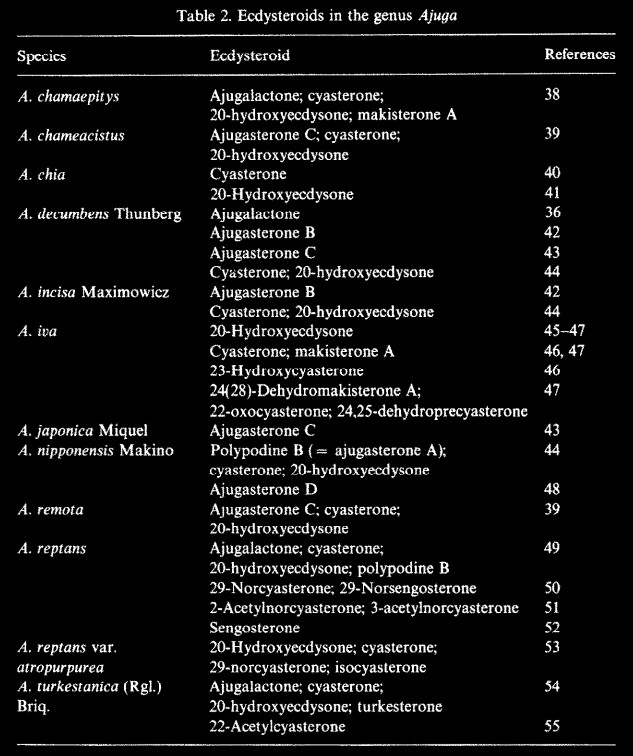 (camps1993)
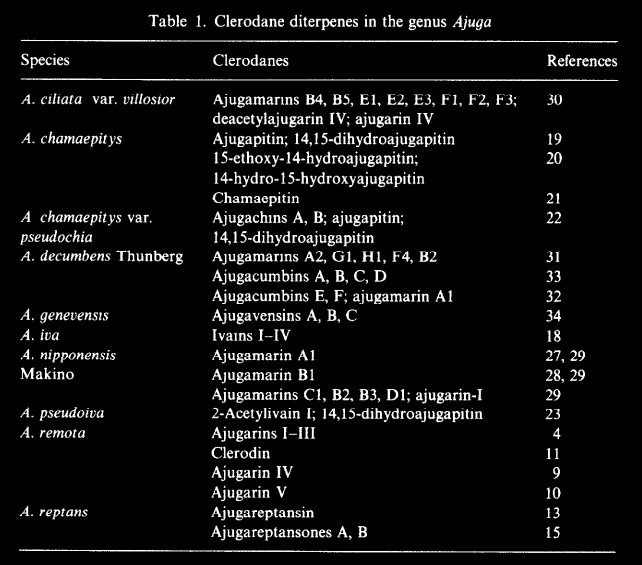 (camps1993)