Family: Apiaceae [E-flora]
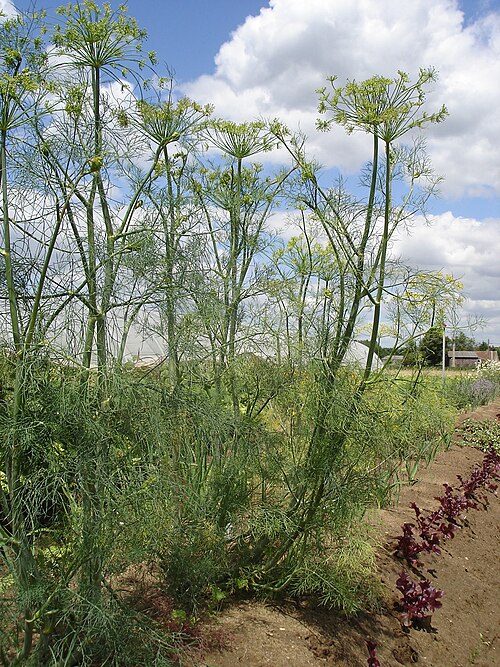
"Anethum graveolens is a ANNUAL growing to 0.8 m (2ft 7in) by 0.2 m (0ft 8in) at a medium rate.
It is hardy to zone (UK) 8. It is in leaf 11-May It is in flower from Apr to July, and the seeds ripen from Jul to August. The flowers are hermaphrodite (have both male and female organs) and are pollinated by Bees.The plant is self-fertile.
It is noted for attracting wildlife.
Suitable for: light (sandy) and medium (loamy) soils and prefers well-drained soil. Suitable pH: acid, neutral and basic (alkaline) soils. It cannot grow in the shade. It prefers moist soil." [PFAF]
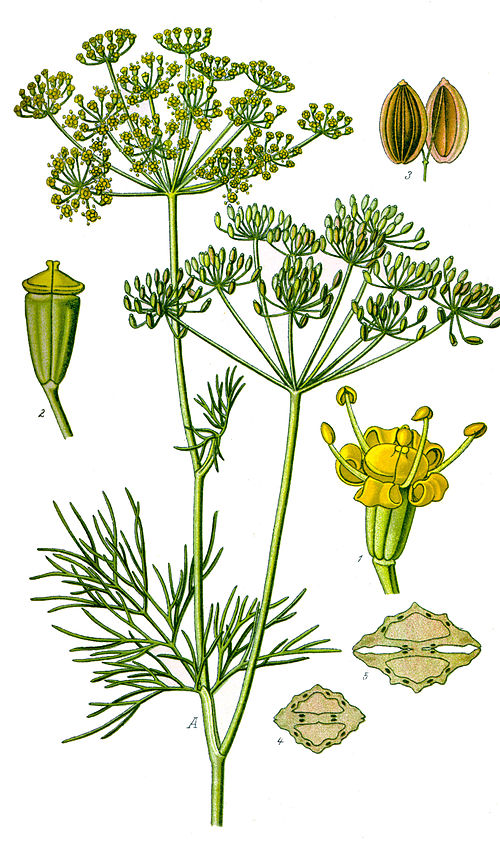
General: "Annual herb from a taproot; stems erect, glabrous, 0.3-1 (1.5) m tall." [IFBC-E-flora]
Leaves: "Stem leaves compound, dissected into linear segments, 4-8 cm long; without well-defined leaflets; aromatic." [IFBC-E-flora]
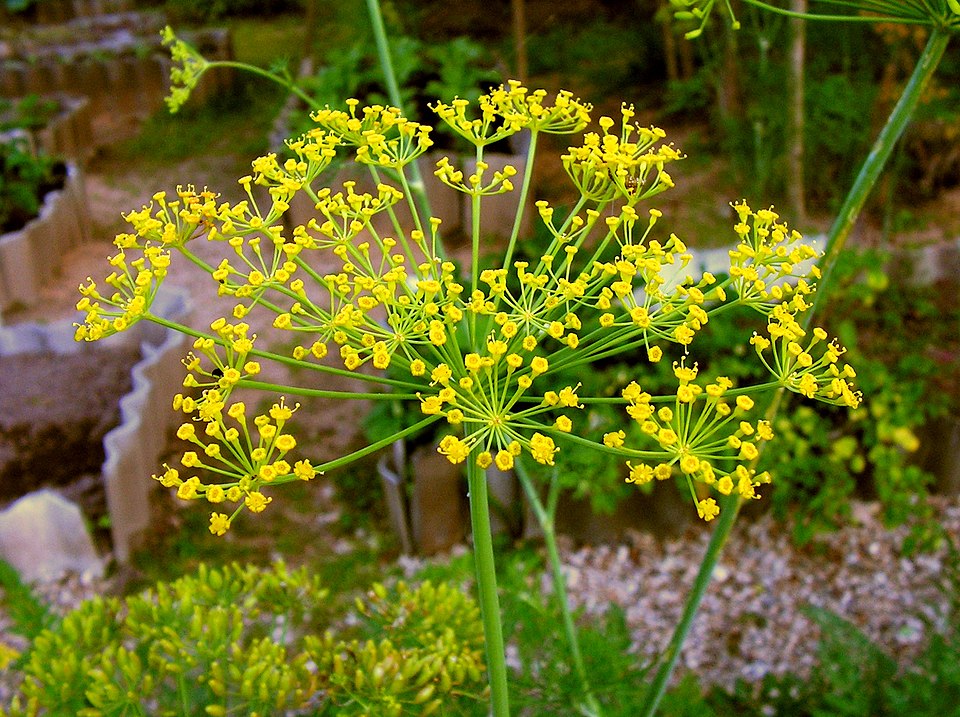
Flowers: "Inflorescence terminal, flat-topped, of umbrella-like clusters; flowers yellow." [IFBC-E-flora]
Fruits: "Numerous, 4 mm long, elliptic, strongly flattened crosswise with winged lateral ribs." [IFBC-E-flora]
Status: Exotic [E-flora]
Habitat / Range "Mesic to dry fields, roadsides and waste places in the lowland zone; rare in SW BC, known from SE Vancouver Island and the lower Fraser Valley; introduced from Asia." [IFBC-E-flora]
"Fields, waste places etc in the Mediterranean[100]. W. Asia. Naturalized in Europe in the Mediterranean[100]." [PFAF]
"Dill is said to contain the alleged 'psychotroph' myristicine[218]. There are also reports that dill can cause photosensitivity and or dermatitis in some people[218]. Avoid dill oil during pregnancy." [PFAF] “Hazards and/or side effects not known for proper therapeutic dosages” (PH2). Contact photodermatosis possible as in most umbellifers. Fresh juice may possibly cause photodermatosis (PHR). We might extend to all apiaceous oils Bisset’s comments on celery seed oil, “The drug is contraindicated in inflammation of the kidneys,” since apiaceous EOs may increase the inflammation as a result of epithelial irritation (BIS). TRAMIL conservatively cautions for dill and fennel; contraindicated in women of reproductive age; limit dosage to 3 days (TRA)." [HMH Duke] "Photodermatosis is possible after contact with the juice of the freshly harvested plant." [PDR]
Other Uses
Medicinal Uses
"The medicinal part is the seed, the fresh or dried leaves and the upper stem." [PDR]
Select Indications (Dill) — Anorexia (2; APA; PHR); Aposteme (f; CRC; JLH); Bacteria (2; APA; KOM; PH2; TRA; ZUL); Cancer (1; CRC; JLH; TRA); Cancer, abdomen (f; CRC; JLH); Cancer, anus (f; CRC; JLH); Cancer, breast (f; JLH); Cancer, colon (fCRC; JLH); Cancer, liver (f; CRC; JLH); Cancer, mouth (f; CRC; JLH); Cancer, stomach (f; CRC; JLH); Cancer, throat (f; CRC; JLH); Colic (1; CRC; PNC; ZUL); Cough (2; APA; CRC; PHR); Cramp (2; APA; KOM; PHR; PH2; TRA); Dyspepsia (2; APA; CRC; KOM); Enterosis (2; APA; PHR; PH2); Gas (1; JFM; PNC; TRA; ZUL); Gastrosis (1; APA; PHR; PH2; TRA); Halitosis (1; APA; PH2); Hemorrhoid (1; APA; CRC); High Blood Pressure (1; APA; FNF; TRA); Induration (f; CRC; JLH); Infection (2; APA; PHR; TRA); Insomnia (2; APA; CRC; PHR; PH2; TRA); Mastosis (f; CRC; JLH); Nephrosis (f; APA; PH2); Stomachache (f; APA; CRC; JFM); Tumor (1; CRC; TRA); Urethrosis (1; APA; PH2); UTI (f; APA; PHR); Water Retention (1; APA; CRC; JFM); [HMH Duke]
"Dosages (Dill) — Chew 1/2–1 tsp seed (APA); 2 tsp crushed seed/cup water (APA); 3 g seed (KOM; PHR); 0.3–1 ml concentrated dill water (PNC); 0.1–0.3 g EO (KOM; PHR); 0.05–2 ml (I’d have said 0.05–0.2) EO (PNC); cf celery seed, close kin (PNC)" [HMH Duke] "Mode of Administration: Whole seeds and crushed fruits are used to make teas and other galenic preparations for internal application." [PDR] "Daily Dosage: The average daily dosage of the seeds is 3 gm; essential oil daily dose is 0.1 to 0.3 gm." [PDR]
Chemicals in: Anethum graveolens L. (Apiaceae) -- Dill, Garden Dill [DukePhyto]
| Chemical Name ↕ | Chemical Class ↕ | Part ↕ | Concentration (ppm) ↕ |
|---|---|---|---|
| 1,4-TERPINENOL | Additional Volatiles & Phthalides | Plant | - |
| 1,5-CINEOLE | Additional Volatiles & Phthalides | Plant | - |
| 1-METHYL-4-ISOPROPENYL-BENZENE | Additional Volatiles & Phthalides | Fruit | - |
| 2-NONANOL | Additional Volatiles & Phthalides | Plant | - |
| 3,6-DIMETHYL-2,3,4,5,8,9-HEXAHYDROBENZOFURAN | Other Nutrients & Organics | Plant | - |
| 3,6-DIMETHYL-3A,4,5,7A-TETRAHYDROCOUMARAN | Other Nutrients & Organics | Fruit | - |
| 3,6-DIMETHYLCOUMARAN | Phenols, Flavonoids & Coumarins | Plant | - |
| 3,7-DIMETHYL-4,5,6,9-TETRAHYDROCOUMARAN | Phenols, Flavonoids & Coumarins | Fruit | - |
| 4-ALPHA-DIMETHYLSTYRENE | Additional Volatiles & Phthalides | Root | - |
| 6,7-DIHYDRO-8,8,DIMETHYL-2H,8H-BENZO-(1,2B:5,4')-DIPYRAN-2,6-DIONE | Phenols, Flavonoids & Coumarins | Plant | - |
| 6-OCTADECENOIC-ACID | Fatty Acids & Lipids | Plant | - |
| 7-OCTADECENOIC-ACID | Fatty Acids & Lipids | Plant | - |
| ALPHA,ALPHA-BETA-TRIMETHYLBENZYL-ALCOHOL | Additional Volatiles & Phthalides | Root | - |
| ALPHA-LINOLENIC-ACID | Fatty Acids & Lipids | Fruit | 1,500 - 1,624 |
| ALPHA-PINENE | Terpenes & Essential Oils | Fruit | 24 - 1,001 |
| ALPHA-TERPINEOL | Terpenes & Essential Oils | Plant | - |
| ALPHA-THUJENE | Terpenes & Essential Oils | Fruit | 36 - 231 |
| ALPHA-TOCOPHEROL | Minerals & Vitamins | Leaf | 16 - 147 |
| ALUMINUM | Trace Elements | Plant | 4 - 210 |
| ANETHOLE | Phenols, Flavonoids & Coumarins | Plant | - |
| ANISIC-ALDEHYDE | Phenols, Flavonoids & Coumarins | Plant | - |
| APIOLE | Phenols, Flavonoids & Coumarins | Root | - |
| ARGINASE | Other Nutrients & Organics | Plant | - |
| ARGININE | Amino Acids & Proteins | Fruit | 12,630 - 13,678 |
| ARSENIC | Trace Elements | Plant | 0.01 - 0.06 |
| ASCORBIC-ACID | Minerals & Vitamins | Plant | 1,440 |
| ASH | Other Nutrients & Organics | Fruit | 64,000 - 84,000 |
| ASH | Other Nutrients & Organics | Plant | 26,000 - 205,880 |
| BENZYL-ETHER | Other Nutrients & Organics | Plant | - |
| BERGAPTEN | Phenols, Flavonoids & Coumarins | Fruit | - |
| BETA-CARYOPHYLLENE | Terpenes & Essential Oils | Plant | - |
| BETA-ELEMENE | Additional Volatiles & Phthalides | Fruit | 12 - 77 |
| BETA-MYRCENE | Terpenes & Essential Oils | Plant | - |
| BETA-PHELLANDRENE | Terpenes & Essential Oils | Fruit | 168 - 1,925 |
| BETA-PHELLANDRENE | Terpenes & Essential Oils | Root | 168 - 1,925 |
| BETA-PINENE | Additional Volatiles & Phthalides | Plant | - |
| BETA-SITOSTEROL | Fatty Acids & Lipids | Plant | - |
| BETA-SITOSTEROL-GLUCOSIDE | Fatty Acids & Lipids | Plant | - |
| BETA-SITOSTEROL-GLYCOSIDE | Fatty Acids & Lipids | Fruit | - |
| BETA-TERPINEOL | Terpenes & Essential Oils | Fruit | - |
| BETA-TERPINEOL | Terpenes & Essential Oils | Plant | - |
| BORON | Trace Elements | Plant | 4 - 35 |
| BORON | Trace Elements | Seed | 28 - 50 |
| BROMINE | Trace Elements | Plant | 1 - 6 |
| BUTYL-PHTHALIDE | Additional Volatiles & Phthalides | Root | - |
| CADMIUM | Trace Elements | Plant | 0.02 - 1 |
| CAFFEIC-ACID | Phenols, Flavonoids & Coumarins | Fruit | - |
| CALCIUM | Minerals & Vitamins | Fruit | 14,003 - 17,671 |
| CALCIUM | Minerals & Vitamins | Plant | 1,900 - 21,453 |
| CAMPHENE | Terpenes & Essential Oils | Plant | - |
| CAMPHOR | Terpenes & Essential Oils | Root | - |
| CARBOHYDRATES | Other Nutrients & Organics | Fruit | 551,700 - 597,491 |
| CARBOHYDRATES | Other Nutrients & Organics | Plant | 558,200 - 602,000 |
| CAROTENOIDS | Other Nutrients & Organics | Leaf | 465 |
| CARVACROL | Terpenes & Essential Oils | Plant | - |
| CARVONE | Terpenes & Essential Oils | Plant | - |
| CARVOTANACETONE | Terpenes & Essential Oils | Fruit | - |
| CHLOROGENIC-ACID | Phenols, Flavonoids & Coumarins | Fruit | - |
| CHROMIUM | Trace Elements | Plant | 0.01 - 0.29 |
| CINEOLE | Terpenes & Essential Oils | Plant | - |
| CIS-CARVEOL | Additional Volatiles & Phthalides | Fruit | - |
| CIS-DIHYDROCARVONE | Additional Volatiles & Phthalides | Fruit | 36 - 12,782 |
| COBALT | Trace Elements | Plant | 0.002 - 0.29 |
| COPPER | Trace Elements | Fruit | 8 |
| COPPER | Trace Elements | Plant | 1.7 - 17 |
| D-(+)-CARVONE | Terpenes & Essential Oils | Fruit | 5,196 - 37,653 |
| D-(+)-DIHYDROCARVONE | Additional Volatiles & Phthalides | Fruit | 168 - 1,925 |
| D-(+)-LIMONENE | Terpenes & Essential Oils | Fruit | 3,972 - 31,416 |
| D-ALPHA-PHELLANDRENE | Additional Volatiles & Phthalides | Fruit | 516 - 7,469 |
| DECANAL | Additional Volatiles & Phthalides | Fruit | 24 - 154 |
| DELTA-5,6-OCTADECENOIC-ACID | Fatty Acids & Lipids | Plant | - |
| DIHYDROCARVEOL | Additional Volatiles & Phthalides | Plant | - |
| DILLANOSIDE | Phenols, Flavonoids & Coumarins | Plant | - |
| DILLAPIOLE | Phenols, Flavonoids & Coumarins | Fruit | 1,440 - 40,425 |
| DIPENTENE | Additional Volatiles & Phthalides | Plant | - |
| EICOSANE | Fatty Acids & Lipids | Root | - |
| ELEMICIN | Additional Volatiles & Phthalides | Plant | - |
| EO | Terpenes & Essential Oils | Fruit | 12,000 - 77,000 |
| EO | Terpenes & Essential Oils | Plant | 5,600 - 15,000 |
| EO | Terpenes & Essential Oils | Root | 300 - 500 |
| ESCULETIN | Phenols, Flavonoids & Coumarins | Fruit | - |
| EUGENOL | Phenols, Flavonoids & Coumarins | Plant | - |
| FAT | Fatty Acids & Lipids | Fruit | 68,000 - 180,200 |
| FAT | Fatty Acids & Lipids | Plant | 43,000 - 47,000 |
| FERULIC-ACID | Phenols, Flavonoids & Coumarins | Fruit | - |
| FIBER | Other Nutrients & Organics | Fruit | 177,230 - 264,869 |
| FIBER | Other Nutrients & Organics | Leaf | 119,300 - 128,000 |
| FLAVONE | Phenols, Flavonoids & Coumarins | Plant | - |
| FLUORINE | Trace Elements | Plant | 0.1 - 5.3 |
| FURFURAL | Other Nutrients & Organics | Plant | - |
| GAMMA-PINENE | Additional Volatiles & Phthalides | Plant | - |
| GAMMA-SITOSTEROL | Fatty Acids & Lipids | Fruit | - |
| GAMMA-TERPINENE | Additional Volatiles & Phthalides | Fruit | 12 - 77 |
| GERANIOL | Terpenes & Essential Oils | Fruit | 24 - 154 |
| HEXADECANE | Fatty Acids & Lipids | Root | - |
| HISTIDINE | Amino Acids & Proteins | Fruit | 3,200 - 3,466 |
| IRON | Minerals & Vitamins | Fruit | 114 - 230 |
| IRON | Minerals & Vitamins | Plant | 23 - 755 |
| ISOEUGENOL | Phenols, Flavonoids & Coumarins | Plant | - |
| ISOLEUCINE | Amino Acids & Proteins | Fruit | 7,670 - 8,307 |
| ISORHAMNETIN | Phenols, Flavonoids & Coumarins | Plant | - |
| ISORHAMNETIN-3-GLUCURONIDE | Phenols, Flavonoids & Coumarins | Plant | - |
| KAEMPFEROL | Phenols, Flavonoids & Coumarins | Fruit | - |
| KAEMPFEROL-3-GLUCURONIDE | Phenols, Flavonoids & Coumarins | Leaf | - |
| LAURIC-ACID | Fatty Acids & Lipids | Fruit | 100 - 108 |
| LEAD | Trace Elements | Plant | 0.05 - 0.8 |
| LEUCINE | Amino Acids & Proteins | Fruit | 9,250 - 10,018 |
| LIMONENE | Terpenes & Essential Oils | Plant | - |
| LINALOL | Terpenes & Essential Oils | Plant | - |
| LINOLEIC-ACID | Fatty Acids & Lipids | Fruit | 9,600 - 10,397 |
| LUTEOLIN-7-GLUCOSIDE | Phenols, Flavonoids & Coumarins | Plant | - |
| LYSINE | Amino Acids & Proteins | Fruit | 10,380 - 11,242 |
| MAGNESIUM | Minerals & Vitamins | Fruit | 2,449 - 2,893 |
| MAGNESIUM | Minerals & Vitamins | Plant | 560 - 6,470 |
| MANGANESE | Trace Elements | Fruit | 18 |
| MANGANESE | Trace Elements | Plant | 8 - 435 |
| MERCURY | Trace Elements | Plant | 0.003 - 0.06 |
| METHIONINE | Amino Acids & Proteins | Fruit | 1,430 - 1,549 |
| METHYL-BENZOATE | Additional Volatiles & Phthalides | Plant | - |
| METHYL-CHAVICOL | Phenols, Flavonoids & Coumarins | Fruit | - |
| MOLYBDENUM | Trace Elements | Plant | - |
| MYRCENE | Terpenes & Essential Oils | Fruit | 84 - 924 |
| MYRISTIC-ACID | Fatty Acids & Lipids | Fruit | 100 - 108 |
| MYRISTICIN | Phenols, Flavonoids & Coumarins | Fruit | - |
| MYRISTICIN | Phenols, Flavonoids & Coumarins | Root | - |
| NEOCNIDOLIDE | Additional Volatiles & Phthalides | Root | - |
| NIACIN | Minerals & Vitamins | Fruit | 28 - 30 |
| NIACIN | Minerals & Vitamins | Plant | 28 - 30 |
| NICKEL | Trace Elements | Plant | 0.1 - 4.7 |
| NITROGEN | Trace Elements | Plant | 6,800 - 55,300 |
| NONADECANE | Fatty Acids & Lipids | Root | - |
| NONANAL | Additional Volatiles & Phthalides | Fruit | - |
| OCTANOL | Additional Volatiles & Phthalides | Root | - |
| OLEIC-ACID | Fatty Acids & Lipids | Fruit | 93,600 - 101,369 |
| P-CYMENE | Terpenes & Essential Oils | Fruit | 336 - 3,773 |
| PALMITIC-ACID | Fatty Acids & Lipids | Fruit | 5,800 - 6,281 |
| PALMITOLEIC-ACID | Fatty Acids & Lipids | Fruit | 500 - 542 |
| PARAFFIN | Fatty Acids & Lipids | Plant | - |
| PENTADECANE | Fatty Acids & Lipids | Root | - |
| PETROSELINIC-ACID-TRIGYLCERIDE | Fatty Acids & Lipids | Plant | - |
| PHENYLALANINE | Amino Acids & Proteins | Fruit | 6,700 - 7,256 |
| PHOSPHORUS | Trace Elements | Fruit | 2,102 - 3,723 |
| PHOSPHORUS | Trace Elements | Plant | 600 - 7,625 |
| POTASSIUM | Minerals & Vitamins | Fruit | 10,680 - 14,122 |
| POTASSIUM | Minerals & Vitamins | Plant | 8,700 - 76,450 |
| PROTEIN | Amino Acids & Proteins | Fruit | 147,680 - 226,000 |
| PROTEIN | Amino Acids & Proteins | Plant | 199,600 - 216,000 |
| QUERCETIN | Phenols, Flavonoids & Coumarins | Plant | - |
| QUERCETIN-3-0-RUTINOSIDE | Phenols, Flavonoids & Coumarins | Plant | - |
| QUERCETIN-3-GLUCURONIDE | Phenols, Flavonoids & Coumarins | Leaf | - |
| QUERCITRIN | Phenols, Flavonoids & Coumarins | Plant | - |
| RIBOFLAVIN | Minerals & Vitamins | Fruit | 3 |
| RIBOFLAVIN | Minerals & Vitamins | Plant | 3 |
| RUBIDIUM | Trace Elements | Plant | 1.1 - 28 |
| SABINENE | Terpenes & Essential Oils | Plant | - |
| SAFROLE | Phenols, Flavonoids & Coumarins | Plant | - |
| SALICALDEHYDE | Other Nutrients & Organics | Plant | - |
| SCOPOLETIN | Phenols, Flavonoids & Coumarins | Fruit | - |
| SELENIUM | Trace Elements | Plant | 0.001 - 0.012 |
| SENKYUNOLIDE | Additional Volatiles & Phthalides | Root | - |
| SILICON | Trace Elements | Plant | 30 - 700 |
| SODIUM | Minerals & Vitamins | Fruit | 158 - 262 |
| SODIUM | Minerals & Vitamins | Plant | 1,097 - 3,308 |
| STEARIC-ACID | Fatty Acids & Lipids | Fruit | 1,000 - 1,083 |
| STIGMASTEROL | Fatty Acids & Lipids | Plant | - |
| SULFUR | Trace Elements | Plant | 1,400 - 11,175 |
| TANNINS | Other Nutrients & Organics | Plant | - |
| TERPINEN-4-OL | Terpenes & Essential Oils | Fruit | 12 - 77 |
| TETRADECANE | Fatty Acids & Lipids | Root | - |
| TETRAHYDROCOUMARANE | Phenols, Flavonoids & Coumarins | Plant | - |
| THIAMIN | Minerals & Vitamins | Fruit | 4 - 5 |
| THIAMIN | Minerals & Vitamins | Plant | 4 - 5 |
| THREONINE | Amino Acids & Proteins | Fruit | 5,750 - 6,227 |
| TRANS-ANETHOLE | Terpenes & Essential Oils | Fruit | 12 - 539 |
| TRANS-CARVEOL | Additional Volatiles & Phthalides | Fruit | 42 - 270 |
| TRANS-DIHYDROCARVONE | Additional Volatiles & Phthalides | Fruit | 24 - 154 |
| TRIDECENE | Fatty Acids & Lipids | Root | - |
| UMBELLIFERONE | Phenols, Flavonoids & Coumarins | Fruit | - |
| UMBELLIPRENIN | Other Nutrients & Organics | Fruit | - |
| UREASE | Other Nutrients & Organics | Plant | - |
| VALINE | Amino Acids & Proteins | Fruit | 11,200 - 12,130 |
| VICENIN | Phenols, Flavonoids & Coumarins | Fruit | - |
| WATER | Other Nutrients & Organics | Fruit | 70,310 - 83,690 |
| WATER | Other Nutrients & Organics | Plant | 73,000 - 830,000 |
| XANTHOPHYLL | Other Nutrients & Organics | Fruit | - |
| Z-LIGUSTILIDE | Additional Volatiles & Phthalides | Root | - |
| ZINC | Minerals & Vitamins | Fruit | 43 - 66 |
| ZINC | Minerals & Vitamins | Plant | 11 - 150 |
Source: [DukePhyto] (DUKE1992A)
Seed and Pericarp
Mass of 1,000, g: 2.2 [1]
Oil, % dry wt: 9.9 (1), 6.8 (2) [1]
FAs: 18:1 (6)–45.0 [2] [LLCEOPS]
In dill weed (Anethum graveolens L.) the content on essential oil rises from 0.1% only in young sprouts to more than 1% in herb with milk ripe umbels (Gora et al., 2002). In the herb, oil a-phellandrene prevails until the beginning of f owering with up to 50%, followed by dill ether, p-cymene, and limonene. The oil from green as well as ripe umbels contains, on the other hand, mainly (S)-carvone and (R)-limonene. The f avor of dill oil changes therefore dramatically, which has to be considered when determining the harvest time for distillation.[CRC HEO]
Common Dill – Anethum graveolens (218) [PFAF]
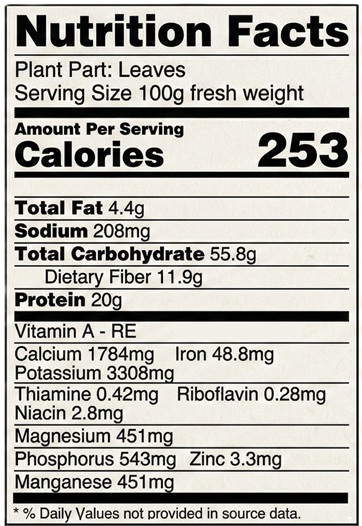
Common Dill – Anethum graveolens (218) [PFAF]
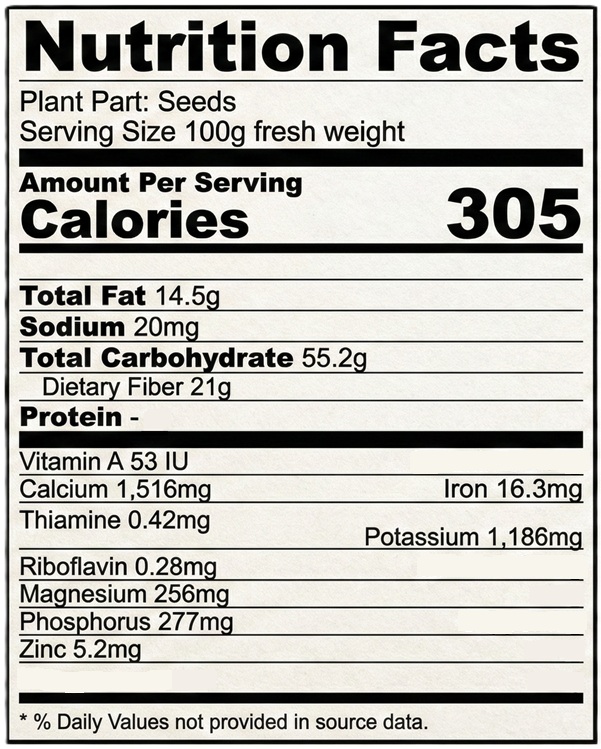
Herb
Volatile oil (0.5 to 1.5%): chief constituents are carvone, dill apiole, (+) limonene [PDR]
Phthalides [PDR]
Seed
Volatile oil (2.5 to 4.0%): chief constituents are carvone (approximately 50%), dill apiole, (+) — limonene [PDR]
Phtalides [PDR]
Fatty oil [PDR]
Furanocoumarins: including bergaptene [PDR]
Hydroxycoumarins: including umbelliferone [PDR]
"Activities (Dill) — Antibacterial (2; APA; KOM; PH2; TRA; ZUL); Antiseptic (1; ZUL); Antispasmodic (2; APA; KOM; PH2; TRA); Antitumor (1; TRA); Aperitif (f; APA); Cardiodepressant (1; APA); Carminative (1; JFM; PNC; ZUL); Detergent (f; CRC); Digestive (f; CRC); Diuretic (1; APA; CRC; JFM); Fungicide (1; TRA); Hypoglycemic (1; TRA); Hypotensive (1; APA; FNF; TRA); Insectifuge (1; ZUL); Lactagogue (1; APA; CRC; JFM; TRA); Laxative (f; CRC); Myorelaxant (1; APA); Narcotic (f; CRC); Psychedelic (f; CRC); Respirastimulant (f; APA); Sedative (1; TRA); Soporific (f; JFM); Stimulant (f; CRC); Stomachic (1; PNC; ZUL); Vasodilator (1; TRA)" [HMH Duke]
"Days to Germination: 21 to 25 days at 600F to 70 0F (160C to 21 0C) When to Plant: Direct-seeding, as early in spring as the ground can be worked, works best with dill, and you can plant it either in spring or fall."[NSSH Bubel]
"How to Plant: Sow the seeds one every inch or so. Thin the feathery seedlings to 4 to 6 inches apart for use as greens and 10 to 12 inches apart for seed production. I like to make one or two extra plantings during the season for a continuous supply of the tender thready leaves that are so good snipped on potatoes or fish. Dill seeds need light to germinate, so they shouldn’t be covered with more than a light dusting of garden sometimes beat those we’ve hand-sown."[NSSH Bubel]
"Growing Conditions: Dill grows well under a wide variety of conditions, as long as it is reasonably free of weeds."[NSSH Bubel]
Synonyms
Peucedanum graveolens.
1 sp. (Latin: dill) [Jepson]


